
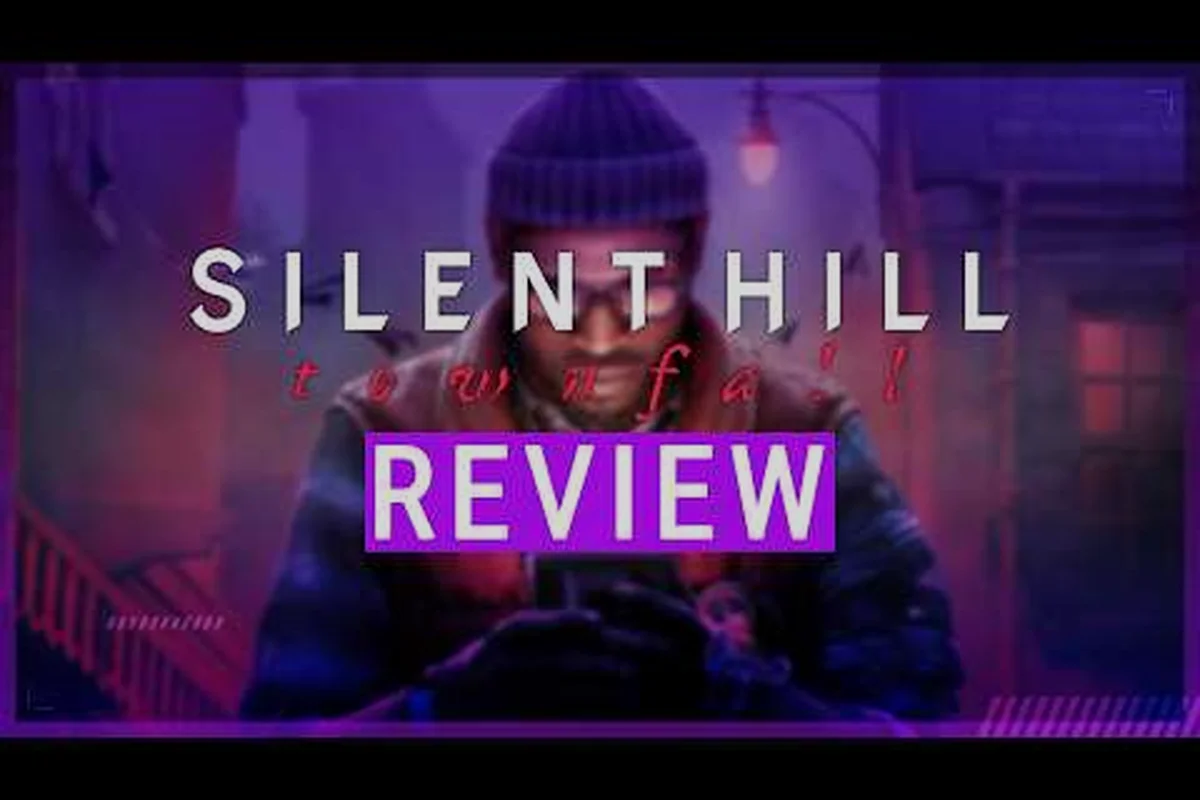
Simon Ordell receives a summons he never expected, and the call drags him back to the fog-bound island of St. Amelia, where the streets he once knew are now drowned in static, salt, and something older than memory. The Silent Hill Townfall story explained here walks through every beat of that 1996 homecoming, the meaning behind the fog, and the branching threads that color each ending. Released on September 24, 2026 by Screen Burn Interactive with KONAMI publishing duties, the title uses a fictional Scottish fishing town to graft a brand-new chapter onto the wider series mythos without depending on the original American locale.
This breakdown covers the full Silent Hill Townfall plot summary, the core Silent Hill Townfall lore elements that recur in notes, CRTV broadcasts, and environmental storytelling, and the broader Silent Hill Townfall timeline of events that frames Simon's journey. Expect concrete scene-by-scene detail, key character motives, and a clear map of how the story choices reshape the final sequence. Spoilers run throughout, so readers who have not finished the campaign may want to bookmark this page for after the credits roll.
Simon Ordell and the 1996 Return to St. Amelia
The protagonist of the Silent Hill Townfall story is Simon Ordell, a man whose past is locked to a place he would rather forget. According to the cast reveal from August 25, 2026, Jovan Adepo voices Simon, a man pulled back to his childhood home after years of absence. The island of St. Amelia sits on a fictional stretch of the Scottish North Sea coast, and the Silent Hill Townfall Scotland 1996 setting roots the entire narrative in a single autumn where the fog rolled in and never lifted. Simon's return is not voluntary; it is engineered by Richard, the enigmatic figure voiced by Terry O'Quinn, who contacts Simon through the CRTV pocket television.
The CRTV replaces the classic radio from earlier entries and acts as both a story device and a survival tool. It scans unstable analog signals for threats, broadcasts cryptic warnings, and slowly assembles a picture of what happened to the town after Simon left. The opening hours of the game alternate between ordinary exploration and intrusive transmissions, establishing that the island is not merely haunted but actively broadcasting. Players who want a spoiler-free preview can consult the Silent Hill Townfall full story companion piece, which traces the same arc without naming every twist.
Who Calls Simon Back
Richard's identity is the first major reveal of the story. He claims to be an old acquaintance with information about Simon's family, but every line of dialogue is layered with implication. He insists that Simon is the only person who can "put things right," a phrase that recurs in notes scattered throughout St. Amelia. The narrative treats Richard as an unreliable guide; he offers useful directions but withholds context, forcing Simon to interpret piecemeal clues from town records, hospital ledgers, and radio chatter. By the midpoint of the story, his true role becomes one of the central questions shaping the ending.
Simon's Personal Stakes
The Silent Hill Townfall plot summary makes clear that Simon is not a stranger stumbling into mystery. He grew up on the island, and his memories are embedded in the locations players explore: the harbor, the clifftop school, the shuttered clinic, and the rows of fishermen's cottages. Notes in his own handwriting appear at the edges of the map, often contradicting the present-day version of the town. That tension between memory and reality is the emotional spine of the story, and it directly informs the choices that determine Simon's fate in the final hours.
The Fog, the CRTV, and the Lore of St. Amelia
The lore backbone of the title is built on a simple but effective conceit: St. Amelia is a place the world has quietly forgotten, and the fog is not weather but a manifestation of collective denial. This reading aligns with the wider series tradition of treating supernatural phenomena as psychological projections, but Townfall leans harder into regional folklore. Fishing superstitions, shipwreck records, and oral histories of the island's founding all feed into the lore, and players who pay attention to optional documents will find a self-consistent mythology that explains the monsters, the static, and the looping geography.
The CRTV as a Story Engine
The CRTV is more than a radio replacement. It is the central narrative lens, and every major plot beat is foreshadowed through its broadcast. The device picks up partial transmissions from three sources: a local radio host who vanished years ago, a Coast Guard channel that warns of "unidentified fog fronts," and an unknown station that plays back recordings of Simon's own voice from conversations he does not remember having. Players can tune the dial at any time, and the snippets they catch inform the active quest line. The CRTV also doubles as a threat detector, warning of nearby creatures and unlocking new story threads when the signal stabilizes.
Environmental Storytelling in St. Amelia
The island of St. Amelia is laid out as a series of small districts connected by fog-choked streets. Each district contributes a different layer to the Silent Hill Townfall lore. The harbor introduces the founding myth; the clifftop offers panoramic views that frame the fog as a literal wall around the town; the school reveals Simon's childhood and the origin of several recurring symbols; the clinic anchors the medical horror subplot; and the lighthouse, locked until late in the story, contains the final confrontation. Notes, posters, and overheard dialogue reward careful exploration, and the Silent Hill Townfall canon timeline article maps these locations to the broader series chronology.
| District | Primary Lore Thread | Key Environmental Clue |
|---|---|---|
| Harbor | Founding myth of St. Amelia | Rusted anchor with an inscription dated 1842 |
| Clifftop | Fog as a natural boundary | Faded Coast Guard warning marker |
| School | Simon's childhood and first symbol | Crayon drawings of a faceless figure |
| Clinic | Medical experiments and the nurse subplot | Ledgers listing unnamed patients |
| Lighthouse | Final confrontation and resolution | Spiral staircase with 77 steps |
Characters, Confidants, and the Voices in the Static
The cast of the Silent Hill Townfall story is small but tightly written, and every character carries weight. Simon is the lens; Richard is the catalyst; and a handful of supporting figures flesh out the town's collapse. The single most important supporting character is Zoe Ellis, voiced by Kezia Burrows, a nurse who contacts Simon through the CRTV and becomes his primary source of ground-truth information about the island's recent history. Without Zoe, the story would lose its moral counterweight, and several of the more hopeful endings are only reachable if Simon maintains a functional relationship with her throughout the campaign.
Zoe Ellis and the Nurse Subplot
Zoe is one of the few characters who remains lucid for most of the story, and her clinical background gives her a rational framework for interpreting the island's strangeness. She documents patient records, takes notes on the fog's effect on residents, and shares them with Simon when the CRTV signal allows. Her subplot ties into the clinic district, where the medical records reveal a pattern of patients who reported the same recurring dream before vanishing. That dream, a figure standing at the edge of the water, is a recurring motif and ties directly into the lighthouse climax. The way players respond to Zoe's updates shapes whether her arc ends in resolution or tragedy.
Richard, the Fishermen, and the Townspeople
Richard orchestrates the early game, but as the story progresses, secondary characters step forward to fill in the gaps. A retired fisherman explains the harbor legend; a schoolteacher's journal documents the children's strange drawings; a Coast Guard operator hints at a federal cover-up; and a small cast of clinic patients provides fragmented testimony about the fog. None of these characters can be saved directly, but their stories feed into the Silent Hill Townfall lore and into the choice architecture that branches the endings. Players who enjoy this level of narrative texture will appreciate the Silent Hill Townfall 1990s horror deep dive, which situates the game's themes against the wider cultural backdrop of the decade.
Plot Beats, Branching Choices, and the Multiple Endings
The story of Townfall is structured around a linear main path with a handful of meaningful branches. The branches are not presented as moral binaries; they are interpretive choices that hinge on how Simon frames his own past. Each branch feeds into a distinct ending, and the game explicitly tracks which narrative weight Simon assigns to memory, guilt, and forgiveness. The Silent Hill Townfall plot summary below covers the major beats in order, but individual scenes shift depending on which evidence players prioritize.
Act 1: The Arrival
Simon reaches St. Amelia by ferry after Richard's call, and the town is immediately wrong. The streets are empty, the fog is unnaturally thick, and the CRTV picks up only fragments. He finds his childhood home, discovers the first set of personal notes, and meets Zoe through the radio. The arrival establishes the tone, introduces the CRTV mechanics, and seeds the first major choice: whether to pursue Zoe's clinical lead or follow Richard's instructions toward the lighthouse. Whichever path is taken first, both are visited before the midpoint.
Act 2: The Investigation
The investigation opens up the full map and lets players roam between districts. The harbor legend is pieced together from local lore; the school reveals the faceless figure that haunts Simon's dreams; and the clinic exposes the medical experiment thread. New monsters appear in each district, and the CRTV begins to transmit longer recordings. The investigation culminates in a scripted sequence at the lighthouse, where Simon encounters a vision of his younger self and must choose whether to accept or reject the memory.
Act 3: The Resolution
The final act moves at a faster pace, condensing several locations into a single descent toward the lighthouse. The climactic sequence depends on how Simon has handled Zoe, what he learned about Richard, and which lore threads he prioritized. The game has four confirmed primary endings plus a hidden fifth ending unlocked by completing the CRTV broadcast log at 100%. Each ending is supported by a final monologue and a distinct visual coda, and none of them simply abandon the lore established earlier.
| Ending | Triggering Choices | Narrative Outcome |
|---|---|---|
| A — Homecoming | Prioritize Zoe, accept the lighthouse vision | Simon reconciles with his past and the fog lifts |
| B — The Long Watch | Prioritize Richard, reject the vision | Simon remains on the island as a permanent witness |
| C — The Other Shore | Focus on the clinic, expose the experiment | Simon leaves but is changed by what he learned |
| D — Static | Ignore secondary leads, rush the lighthouse | The fog consumes the town and Simon is lost |
| E — The Signal (hidden) | Complete every CRTV broadcast | The true nature of the static is revealed |
Timeline of Events in St. Amelia and the Wider Series
A clean Silent Hill Townfall timeline helps place the story in context. The game is set in 1996, but its events reference an earlier incident in 1987, when the original Silent Hill incident occurred in the United States. St. Amelia is not the American town; it is a separate location with its own history, but the designers have confirmed that the supernatural phenomena are connected. Townfall is canonically adjacent to the wider series, and the timeline below records the in-game events in chronological order.
| Year | Event | Location |
|---|---|---|
| 1842 | Founding of St. Amelia as a fishing settlement | Harbor district |
| 1923 | First recorded "fog wall" sighting | Clifftop |
| 1962 | Clinic established; first wave of vanishing patients | Clinic |
| 1983 | Simon Ordell born on the island | Residential district |
| 1987 | Original Silent Hill incident (referenced) | Silent Hill, USA |
| 1993 | Faceless figure motif appears in school drawings | School |
| 1995 | Richard arrives and begins making contact | Unknown |
| 1996 | Simon returns; main story events | All of St. Amelia |
| 1996 (epilogue) | Ending-specific resolution | Lighthouse |
The timeline confirms that the events of 1996 are a local recurrence rather than a global event, which is why the series can continue to add new settings without contradicting its own history. Players who want to track how the lore evolves across multiple playthroughs can pair this breakdown with the Silent Hill Townfall story recap companion guide, which documents how the in-game documents tie back to the timeline.
Monsters, Symbols, and the Meaning of the Fog
The monsters in Townfall are not randomly selected. Each creature is tied to a specific piece of lore, and the developers have been explicit about the symbolism behind their designs. The Escapist's launch review describes the enemies as "tumorous creatures with axe-like heads or syringes in wounds," and that imagery is not decorative. The axe-headed figures are visual echoes of the fishermen's tools, transformed by the fog into something that combines labor and violence. The syringe-wound figures represent the clinic experiments, where patients were subjected to untested treatments and emerged physically altered.
Combat Intent and Stealth
Combat in the game is intentionally clumsy, with wild melee swings and unreliable blocks, which is itself a narrative choice. Simon is not a trained fighter; he is a man struggling to survive in a place that does not want him there. The late-game revolver hits hard but reloads slowly and attracts creatures through noise, so direct confrontation is rarely the optimal approach. According to the PlayStation Store feature list, the game favors selective confrontation and stealth, and the CRTV is the primary tool for avoiding fights entirely. This design philosophy reinforces the story's themes: the monsters are reflections of the town's trauma, and fighting them only amplifies the noise that draws more of them.
The Faceless Figure
The most persistent symbol in the story is the faceless figure that appears in the school drawings, in Simon's dreams, and in the lighthouse sequence. The figure has no specific identity, and the game deliberately avoids naming it. It is read by different characters as a ghost, a metaphor, a manifestation of guilt, and a literal survivor of the 1962 clinic experiments. The ambiguity is intentional, and players who want a detailed thematic analysis can read the Silent Hill Townfall truth behind the static essay, which unpacks the symbolism across all four districts.
Reception, Themes, and Why the Story Resonates
The Metacritic page lists Townfall at a Metascore of 81 on PS5 from 64 critic reviews and 82 on PC, with 80% of critics rating positively. Individual outlets have ranged from Radio Times at 100 to Cultura Geek at 60, and the spread is driven almost entirely by pacing complaints. The Escapist described the experience as "an often phenomenal ride held back by pacing — bold, brilliant and exhausting." The story itself is consistently praised, while the back half of the campaign is criticized for cramming too many revelations into too short a window. For a complete look at the studio's approach, the SILENT HILL: Townfall on Steam store page lists the official feature set, including the CRTV mechanics, the multiple endings, and the psychological horror tag that anchors the marketing.
Recurring Themes
The narrative resonates because it does not lean on cheap jump scares. The story is about return, about confronting the version of a place that lives in memory, and about the way small communities process trauma. The 1996 setting is a deliberate choice: it places the events before the digital age, when analog signals, paper records, and oral histories were the only tools available for understanding the strange. That grounding in pre-internet horror gives the title a distinct texture, and the CRTV is the perfect device for the era. Simon's journey is not about defeating a villain; it is about accepting that the town he remembers never quite existed the way he thought it did.
How the Story Connects to Wider Series Lore
While Townfall is set in Scotland rather than the American Northeast, the lore is not isolated. Notes reference the 1987 incident obliquely, and the fog mechanics echo the same psychological projection seen in earlier entries. The developers have left enough room for a direct sequel or a crossover event without mandating one, and players who track the wider series will recognize familiar motifs rendered through a new cultural lens. That balance of continuity and independence is one of the strongest achievements of the story, and it gives the title a clear place in the franchise without forcing it to repeat the original template.
Frequently Asked Questions
What is the basic Silent Hill Townfall story explained in one sentence?
Simon Ordell returns to his childhood home of St. Amelia in 1996 after receiving a cryptic summons, and the game follows his investigation of the fog, his relationships with the survivors, and the choices that determine whether he can leave the island intact.
How does the Silent Hill Townfall Scotland 1996 setting affect the story?
The 1996 setting places the narrative in a pre-internet era, so the CRTV pocket television replaces the classic radio and serves as the primary storytelling device, while the Scottish fishing town gives the horror a regional folklore backbone that distinguishes it from the American entries.
Is St. Amelia connected to the original Silent Hill town?
St. Amelia is a separate location with its own founding myth and incident history, but the supernatural phenomena are connected to the wider series mythos, and in-game documents reference the 1987 events without making the two locations geographically identical.
How many endings does the game have?
There are four primary endings and one hidden ending, each tied to the choices Simon makes about his memories, his relationships, and the order in which he investigates the town's districts, and the hidden ending requires completing the CRTV broadcast log at 100%.
What is the meaning of the faceless figure in the story?
The faceless figure is intentionally ambiguous, and the game offers multiple readings including a ghost, a manifestation of guilt, a survivor of the 1962 clinic experiments, and a metaphor for the version of the town that lives only in Simon's memory, and players are encouraged to interpret it through their own playthrough.