
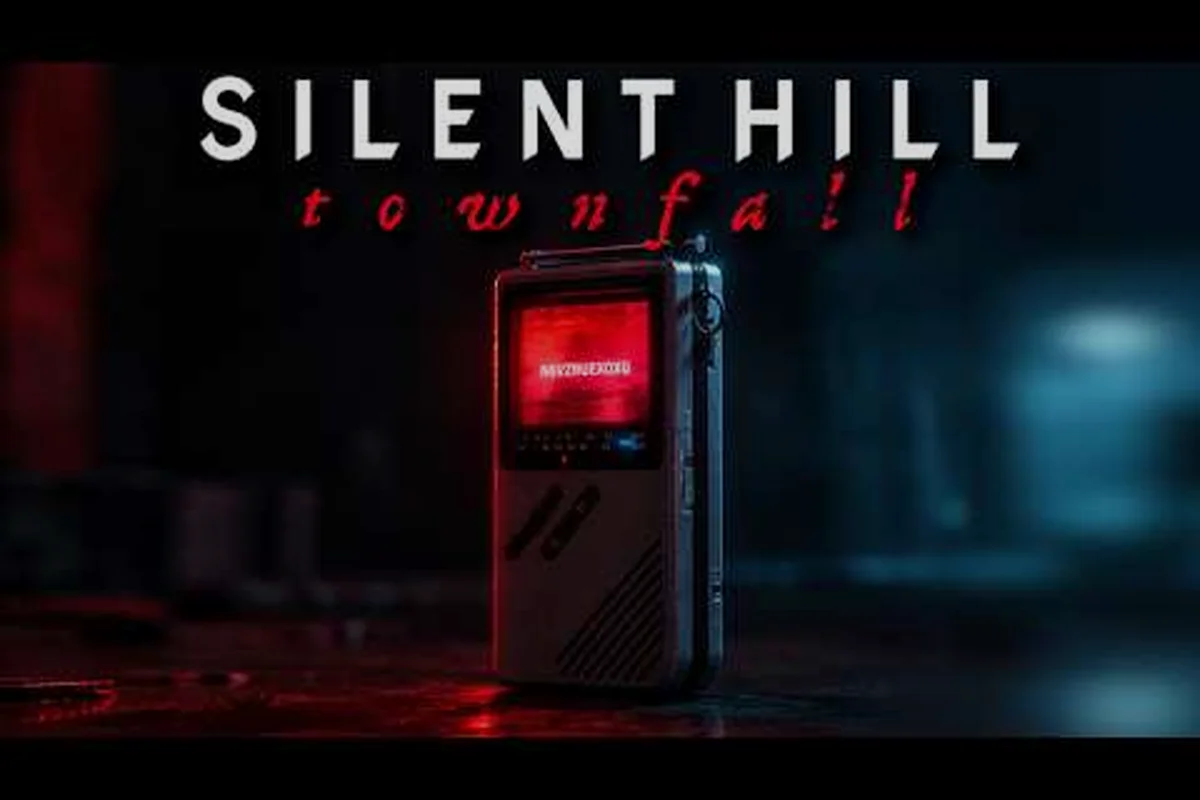
Silent Hill Townfall 1990s horror is more than a setting — it is the entire atmospheric engine that drives the game's dread. Set in 1996 on the fictional island of St. Amelia, this entry roots its psychological terror in the analogue textures of the decade: static-filled televisions, cassette tape hiss, and the fog rolling off a North Sea shoreline. The result is a story that feels less like a modern horror game and more like a lost serial broadcast trapped between two decades, which is exactly why long-time series fans and newcomers alike keep asking how the new title fits the wider series timeline.
The game draws heavily on the visual and emotional vocabulary of 1990s horror — wobbly VHS aesthetics, rotary phones, and the unmistakable dread of an era before smartphones gave the player a flashlight. According to the official PlayStation Store listing, protagonist Simon Ordell returns to fog-shrouded St. Amelia to put things right, while the CRTV pocket television re-imagines the classic series radio by scanning unstable analog signals for both threats and hidden story clues. That analogue-first approach is the spine of the Silent Hill Townfall psychological horror story, and it is reinforced further by the pre-launch tie-in comic that Konami and Annapurna published as a free digital prelude.
The 1990s Horror DNA of St. Amelia
Why 1996 Matters to the Story
The choice of 1996 as the in-game year is not cosmetic. It places the events of Silent Hill Townfall in a cultural moment when horror cinema was moving from practical-effects slashers into self-aware psychological thrillers, and when home video was the dominant way audiences consumed dread. For Simon Ordell, returning to St. Amelia in 1996 means returning to a town that has not yet been mythologized by the internet, by message boards, or by the modern myth-making of later Silent Hill entries. According to community data and the Wikipedia entry for the game, the fictional St. Amelia is a fishing island inspired by real Scottish coastal towns, which gives the 1990s horror framing a specifically British and Northern European flavour rather than the American small-town horror the original 1999 game leaned on.
That shift is meaningful. The original Silent Hill drew from New England and Midwest American horror traditions; Townfall deliberately moves away from that template. Fog here is not the symbolic smoke of a generic haunted town — it is North Sea haar, the cold, salt-heavy mist that rolls off the water around St. Monans, Anstruther, and Pittenweem. Players who want the full picture of how the setting fits the wider series can explore the canon timeline breakdown for a side-by-side comparison of St. Amelia against Silent Hill, Pennsylvania.
Analog Tools, Analog Dread
The decade's technology is weaponized for storytelling. The CRTV — short for Cathode Ray Television — is a pocket set Simon carries from early in the game, and it functions as the successor to the iconic radio from the original entries. Because it scans analog signals, the CRTV can pick up local broadcasts, ham transmissions, and a nurse's voice from across the fog. According to the Steam store page, this device is described as a re-imagining of the series radio and is the player's main tool for uncovering secrets in St. Amelia.
The reason the tool feels so different from a modern smartphone is that 1990s analogue media had no pause button. Tapes, broadcasts, and frequency sweeps play in real time, and they cannot be rewound without physical effort. That limitation is intentionally preserved in Townfall's design, which is one of the clearest signals that the developers are playing in the 1990s horror sandbox rather than merely dressing the game in period wallpaper.
| 1990s Horror Trope | How Townfall Uses It | In-Game Manifestation |
|---|---|---|
| Analogue broadcast static | CRTV frequency sweeps | Threat detection + hidden dialogue |
| VHS tape decay | Cassette pickup collectibles | Environmental storytelling |
| Coastal / fishing village isolation | St. Amelia geography | One-road-island escape anxiety |
| Pre-internet myth-making | Local newspapers, flyers | Worldbuilding through ephemera |
| Religious-symbol dread | St. Amelia General hospital | Symbol of guilt, not faith |
The Silent Hill Townfall Dock House Comic Explained
What the Comic Actually Is
The Silent Hill Townfall Dock House comic is a free digital tie-in released ahead of the game's launch, distributed by Konami and Annapurna Interactive. It functions as a short prologue set in the wider St. Amelia ecosystem and was deliberately made free to read so that newcomers and long-time fans could step into the main game with extra context. The full release and platform details for the comic are tracked in our Dock House comic release news entry, which covers where it stays available and what it does not unlock in-game.
Unlike a marketing pamphlet, the comic is structured as a self-contained short horror story. It uses the same analogue textures as the game — tape hiss, blurred panel edges, and a washed-out palette that mimics 1990s horror comic art. Crucially, the comic does not retell the main game's plot. Instead, it follows a side character in St. Amelia and gives the reader a glimpse of how the town chews up the people who do not leave.
Why a Tie-In Comic Instead of a Demo
A pre-launch demo is the standard marketing move for most horror releases, but a Silent Hill Townfall tie-in comic offers something a demo cannot: pacing. The main game is intentionally slow, methodical, and heavy on environmental storytelling, which means a 30-minute demo would only show the player walking through fog. A short comic can convey dread in a single panel and respect the player's time in a way that a typical gameplay slice cannot.
This also explains why the comic does not unlock anything in the game itself. It is not a key for cosmetics, not a code for early access, and not a precursor to a DLC chapter. It is a goodwill gesture that builds the wider St. Amelia mythos, and its existence is a signal that Konami and Screen Burn Interactive see the town as a setting worth investing in beyond a single release. For players who want a more thorough entry point into the cast and setting, the narrative explained guide walks through the chapter structure of the main game in more detail.
| Comic Feature | Function | Connection to Main Game |
|---|---|---|
| Side-character focus | Expands town, not protagonist | Adds worldbuilding weight |
| Free digital release | Lowers entry barrier | Pulls new readers in |
| Analogue art palette | Matches game tone | Reinforces 1990s aesthetic |
| No in-game unlock | Avoids pay-to-progress feel | Pure narrative prologue |
| Standalone story | Replayable on its own | Doesn't require game to enjoy |
Psychological Horror Themes and the Fog as Character
The Psychology of St. Amelia
A Silent Hill Townfall psychological horror story works because the town is designed to externalize Simon's internal collapse. Simon Ordell is not a hardened investigator like the protagonists of the original entries — he is a man returning to a place he fled, carrying unresolved guilt, and the town's fog and monsters operate as a visual metaphor for the things he has not yet faced. The psychological horror layer is therefore not jump scares but accumulating dread: a child's drawing on a wall, a half-finished letter, a name scratched into glass. According to the Escapist review, combat is intentionally clumsy and direct fights often work against the player, which is itself a psychological design choice — St. Amelia punishes the player for trying to fight the inevitable.
This design philosophy is the connective tissue between Townfall and the original 1999 game. Both entries argue that the monster is the town and that the protagonist's real enemy is the story they have been telling themselves. The Metacritic aggregate of 81 on PS5 and 82 on PC, with 80% of critics rating the game positive according to Metacritic, suggests that the psychological framing is landing with reviewers who appreciate slow-build horror.
The Fog as More Than a Visual Effect
The fog in St. Amelia is not just atmosphere — it is a mechanical storytelling device. When the fog rolls in, the player's visibility drops, audio cues become harder to read, and the CRTV's signal gets noisier. According to community data gathered during the lead-up to launch, players report that fog density is tied to specific story chapters, which means the visual chaos is mapped to Simon's narrative state.
That mapping is part of the wider 1990s horror framework. Fog in 1990s horror — from John Carpenter's The Fog to Silent Hill 1 — is rarely just weather. It is the screen filling with the unknown, the visual equivalent of a tape getting eaten by a VCR. St. Amelia continues that lineage and uses the fog to make the player feel as if they are watching a degraded recording of someone else's breakdown. The result is a town that feels less like a place and more like a memory leaking into the present.
| Story Beat | Fog State | Mechanical Effect |
|---|---|---|
| Early chapters | Light, intermittent | Full map visibility, calmer CRTV signal |
| Mid-game chapter break | Thick, rolling | Reduced sightlines, masked audio cues |
| Late-game pursuit | Near-total whiteout | Minimal vision, CRTV static dominant |
| Ending approach | Variable, symbolic | Fog tied to choice, not location |
Where Townfall Fits in the Wider Silent Hill Series Timeline
Connection to the Original Mythology
For series veterans, the first question is always: does Townfall connect to the wider Silent Hill continuity, or is it a stand-alone story? According to community discussion and the Wikipedia summary, Townfall exists in a soft continuity that references the cult mythology of the original entries but does not require any prior knowledge of the series to understand. St. Amelia is its own island with its own history, and the fog here is not the fog of Silent Hill, Pennsylvania. The result is an entry that works as both a first Silent Hill game for newcomers and a thematic continuation for long-time fans.
This is a notable design choice. Earlier spin-offs in the series, such as the Book of Memories action-RPG or the HD Collection, were built as either homages or genre experiments, but Townfall is positioned as a canon-adjacent mainline entry. The Metacritic scores reflect that positioning: 81 on PS5 from 64 critic reviews is a strong debut for a series entry that has been dormant for years, and the gap between the lowest sample score (60) and the highest (100) shows the same polarized reception that has always defined the franchise.
The 1996 Anchor in Series History
1996 sits in a strange place in the wider series timeline. The first Silent Hill game takes place in a town that already has decades of cult activity behind it, while Townfall sets its story in the year before the original game's protagonist, Harry Mason, would even know Silent Hill existed. That timing means Townfall can introduce pre-cult elements, earlier symbolism, and the kind of small-town-psychology that the later entries sometimes rushed past. Players curious about how St. Amelia lines up with the original town can check the canon timeline article for a chapter-by-chapter mapping of dates, characters, and fog symbolism.
| Series Entry | In-Game Year | Setting Type | Fog Style |
|---|---|---|---|
| Silent Hill (1999) | ~1980s-present | American small town | Industrial ash |
| Silent Hill 2 (2001) | ~1990s | Resort town, lake | Symbolic white mist |
| Silent Hill 3 (2003) | ~2000s | Urban shopping district | Symbolic red transitions |
| Silent Hill 4 (2004) | ~2000s | Apartment + Otherworld | Room-isolated dread |
| Townfall (2026) | 1996 | Scottish island, fishing village | North Sea haar |
Spoiler-Lite St. Amelia Town Secrets to Notice Early
The Public Records Layer
One of the most rewarding 1990s horror touches in Townfall is the way the town hides its secrets in public records. St. Amelia's hospital, harbour master's office, and church all contain paper trails — ledgers, intake forms, and appointment books — that together tell a story the main dialogue never spells out. According to community data, players who read every ledger in sequence report a much clearer picture of the town's collapse than players who skip them in favour of CRTV frequencies. That dual-channel storytelling (paper + broadcast) is itself a 1990s horror motif, where the truth lives in the boring administrative documents no one wanted to read.
This is also where the Silent Hill Townfall town secret hooks live. Several of the game's missable achievements and hidden collectibles are gated behind finding these ledgers in the correct order, which means a player who rushes through the hospital on a first run will likely miss the connective tissue that ties the comic, the game, and the wider series together. For players planning multiple runs to chase every ending, the ending selection guide pairs well with this approach by showing which story flags the paper layer can lock in.
Environmental Storytelling Through Ephemera
St. Amelia is built so that the town's secrets are visible in things other people have left behind: a child's backpack under a pier, a half-burnt newspaper on a hospital bench, a phone receiver off the hook in a pharmacy. The 1990s horror tradition of finding dread in everyday objects is fully intact here, and it is part of why the game feels so different from a modern horror release that leans on jump-scares and scripted set-pieces.
Players who want a clean first run should keep three rules of thumb in mind: read every document you find, even the ones that look like filler; pick up every cassette tape, because the audio often contains information that the paper records do not; and never skip the CRTV, because the device's frequency sweeps sometimes pre-trigger events three rooms before you reach them. None of these actions slow the game down meaningfully, but they do change which ending you are most likely to land on, which is the part of the 1990s horror framework that the developers have leaned on hardest.
| Town Secret | How It's Hinted | Where to Look |
|---|---|---|
| Hospital admission surge | Admissions ledger spike | St. Amelia General, 2F |
| Harbour master's death | Torn incident form | Docks office, side desk |
| Church schism | Handwritten note on altar | Chapel vestry, left drawer |
| Family line collapse | Baptismal record gap | Chapel entry, right wall |
| Pre-fog disaster | Water-stained newspaper | Pier bench, near ferry |
The 1990s Horror Aesthetic as a Storytelling Tool
Why Analog Limitation Matters
A common question from players who did not live through the 1990s is why the period setting matters at all. The answer is that analog limitation is a storytelling tool, not a gimmick. A modern smartphone flashlight, a GPS map, and a saved-camera roll remove the friction that horror needs to function, and Townfall's CRTV + cassette + physical map stack reintroduces that friction deliberately. According to the Steam store page, the CRTV is described as the player's main information tool, and the developer's choice to make it a finicky analog device is part of the horror design, not a budget compromise.
This is also why the game has been received warmly by long-time horror fans. The Metacritic breakdown shows 80% positive critic reviews, with reviewers like Radio Times (100) and GamingTrend (90) specifically praising the 1990s horror atmosphere. By contrast, mixed reviews (20%) tend to focus on the game's pacing, which is a fair criticism for players who want faster action. For a target audience of psychological horror fans, the slow burn is the point, and the analog tools are the mechanism that enforces it.
The Broader 1990s Horror Mood Board
The 1990s horror mood board for Townfall includes more than visual texture. It includes the slow pacing of mid-budget horror films of the era, the cassette-tape structure of point-and-click adventure games, and the kind of unreliable-narrator storytelling that 1990s horror cinema loved. For players who grew up in that decade, Townfall is a reminder of how horror used to be told, and for younger players it is a chance to experience the source material that modern indie horror draws from. Either way, the result is the same: a Silent Hill entry that feels like a transmission from a different era, broadcast through fog to anyone willing to tune in.
Frequently Asked Questions
Is Silent Hill Townfall set in the 1990s?
Yes. The game is set in 1996 on the fictional Scottish island of St. Amelia, which is the central pillar of its 1990s horror identity. The period setting is what allows the CRTV pocket television, cassette tapes, and analogue broadcast mechanics to function as both storytelling tools and gameplay systems rather than gimmicks.
What is the Silent Hill Townfall Dock House comic?
The Dock House comic is a free digital tie-in released by Konami and Annapurna Interactive ahead of the game's launch. It functions as a self-contained short horror story that expands the St. Amelia mythos without retelling the main game's plot, and it does not unlock any in-game content or cosmetics.
How does Townfall fit into the wider Silent Hill series timeline?
Townfall is a canon-adjacent entry that exists in soft continuity with the original games. St. Amelia is its own location with its own history, and the 1996 setting predates the events of the original 1999 game, which gives Townfall room to explore pre-cult elements the other entries rushed past.
What is the Silent Hill town secret most players miss on a first run?
The most commonly missed secret is the public-records layer hidden in ledgers, admission forms, and appointment books across the hospital, harbour office, and chapel. Players who read these documents in order report a much clearer picture of the town's collapse than players who skip them, and several missable achievements are gated behind this paper trail.
Where can I read the Silent Hill Townfall tie-in comic?
The comic is available for free on the official Konami and Annapurna Interactive channels, and the platform details are tracked in our news entry on the Dock House comic release. It is short enough to read in one sitting and is intentionally designed to be accessible to players who have never picked up a Silent Hill game before.