
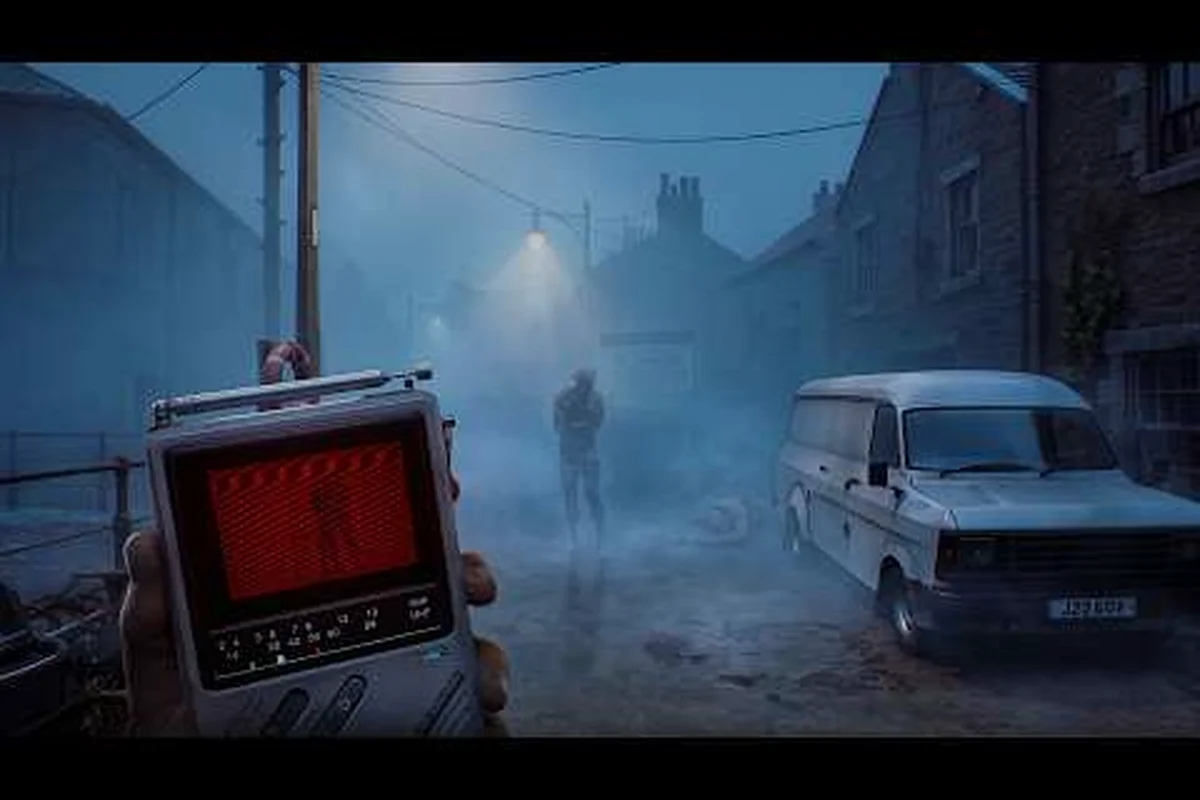
Combat in SILENT HILL: Townfall is intentionally clumsy, and that clumsiness is the entire point. Reviewers describe wild melee swings, unreliable blocks, and a deliberately limited toolset of breakable melee weapons, a single sidearm, and throwables like bottles and bricks. Knowing what is in your hands, how long it will last, and when to fall back on a tool like the portable CRTV is the difference between a clean run and a restart. This guide breaks down every melee weapon and firearm in Townfall, explains the durability system that governs them, and shows how to stretch a small arsenal across the entire fog-choked island of St. Amelia.
The Melee Arsenal: Improvised, Breakable, and Surprisingly Layered
Townfall leans hard into the "improvised weapon" tradition that has defined the series since the original fog-covered streets. Pipes, boards, and whatever else Simon Ordell can pry from a wall form the backbone of close-quarters combat. The catch, emphasized by both the GamingBolt review and community discussion on the r/silenthill Townfall thread, is that nearly every melee tool shatters after a handful of swings. That fragility pushes players toward positioning, timing, and escape options rather than brute force.
Common Melee Tools and What They Actually Do
The melee roster is small, but each piece of debris behaves slightly differently. The table below summarizes the improvised tools players report encountering most often across the early and mid sections of the island, based on aggregated community notes and the review consensus.
| Weapon | Source | Reach | Swing Speed | Durability | Notes |
|---|---|---|---|---|---|
| Rusted Pipe | Debris piles, alleys | Short | Fast | Very Low (2-4 swings) | Reliable stagger on light enemies |
| Wooden Plank | Boarded windows, docks | Medium | Medium | Low (3-5 swings) | Better reach than pipe, slower recovery |
| Fire Axe | Shed walls, fisher huts | Long | Slow | Medium (6-8 swings) | Can pin lighter enemies against geometry |
| Crowbar | Garage shelves, boat holds | Short | Fast | Medium (5-7 swings) | Best option for breaking crates to chain encounters |
| Butcher Knife | Kitchen drawers, butcher shop | Very Short | Very Fast | Very Low (1-3 swings) | High damage, near-zero safety margin |
| Lead Pipe (Heavy) | Industrial yards, later zones | Medium | Slow | Medium-High (7-9 swings) | Causes audible noise that attracts roaming threats |
Durability values reflect aggregated community reports; exact swing counts may vary by difficulty and patch, as noted in our adjustable difficulty reference. The Escapist review frames the entire melee roster as "intentionally clumsy," so the goal is not to combo endlessly with any of these, but to land one or two committed strikes and disengage.
How Durability Shapes the Loop
Every melee weapon in Townfall degrades in real time. The pipe in your hands at the start of a foggy alley will not be the pipe in your hands thirty seconds later, and there is no on-screen durability bar. Players instead watch for three telltale signs: a slight wobble in the swing animation, a quieter impact thud, and finally a crack sound as the model snaps in Simon's hands.
-
Commit only when you must. A single confirmed swing is worth more than a flurry that chips durability.
-
Swap proactively. Picking up the next weapon before the current one breaks keeps your stagger game intact.
-
Use geometry. Pinning a creature against a wall, a railing, or a doorframe reduces the number of swings needed and preserves the weapon for the next encounter.
-
Save heavy hitters for elites. The Fire Axe and Lead Pipe are too valuable to spend on fodder when a plank or pipe will do.
Durability is only half the survival equation, because the other half is never letting a single enemy lock eyes on you long enough to land a hit. If you want a deeper dive into positioning, peeking around cover, and using cupboards to break line of sight while you cycle through fresh melee weapons, the stealth-focused survival guide pairs naturally with the durability loop covered above, since every avoided swing is durability you keep for the next real fight against a Nurse or a Mandarin.
Firearms: Scarce, Loud, and a Real Commitment
The firearm roster in Townfall is famously thin. The GamingBolt review calls it "a limited toolset" centered on a single sidearm and throwables, while The Escapist notes that a late-game revolver "hits hard but reloads slowly and attracts creatures via noise." This combination of scarcity and noise is deliberate: every gunshot is a tactical decision with consequences that echo through the next several rooms.
The Firearm Roster at a Glance
| Firearm | Where It Appears | Damage | Ammo Capacity | Reload Speed | Noise Signature | Best Use |
|---|---|---|---|---|---|---|
| Pistol | Mid-game, single pickup | Medium | 6 rounds | Medium | Loud | Mid-range staggers, finishing wounded foes |
| Revolver | Late-game, story-locked | High | 5 rounds | Slow | Very Loud | Heavy hitters and shielded threats |
| Service Revolver (Bonus) | New Game+ only | High | 6 rounds | Medium | Very Loud | Replaces pistol with stronger frame |
Ammunition is finite. Wasted shots cannot be replaced, and sidearm pickups are spaced far apart, which is why the community has converged on a simple rule: if the pistol comes out, the player has already decided that melee is too risky for this specific threat.
When to Pull the Trigger
Because noise draws extra attention, the firearm is a triage tool rather than a primary weapon — every pistol or revolver shot in Townfall registers on the CRTV's signal indicator and can trigger a fresh enemy wave, so Simon should only pull the trigger when the engagement is already loud (smashing crates, breaking glass), already dangerous (a wounded enemy closing distance), or already about to escalate. In practice this means holding fire during a clean melee stagger and reserving the revolver for moments where pipes, planks, or fists cannot resolve the threat without exposing Simon to a counter-strike, keeping the noise floor low and ammo stocked for the situations melee weapons genuinely cannot reach.
-
Wounded elites that survived a melee swing. A single pistol round finishes the job without exposing Simon to a counterattack.
-
Enemies on elevated ground. Pipes and planks cannot reach a creature perched on a roof beam or scaffolding, but a bullet can.
-
Crowded rooms where one survivor is enough. Dropping the nearest threat can break a swarm's formation and let you retreat to cover.
-
Boss-pattern windows. Some late encounters expose a vulnerability only at range; the revolver is the cleanest answer.
Defaulting to a melee swing first preserves ammo and keeps the noise floor low, which matters when the CRTV is already warning of signals on nearby frequencies — a single crate smash can push the indicator into yellow, so firing a revolver round on top of that often tips it into red and summons a new wave before Simon has cleared the current room.
Throwables: The Forgotten Middle Layer
Throwables are technically not melee weapons and not firearms, but they sit in the same hand slot and shape the same encounters. Bottles and bricks are the most common, scattered across crates, alleys, and boat decks. The GamingBolt review lists them as a core part of the survival kit, and players on the r/silenthill discussion thread frequently mention them as the cleanest way to handle distant silhouettes without committing to a noise spike.
| Throwable | Common Location | Effect | Stun Duration | Breakable? |
|---|---|---|---|---|
| Glass Bottle | Bars, kitchens, boats | Distraction + light damage | 2-3 seconds | Yes (single use) |
| Brick | Construction sites, shorelines | Stagger on direct hit | 3-4 seconds | No (reusable until placed) |
| Molotov Cocktail | Late-game, story pickups | Area denial, fire DOT | 5-6 seconds | Yes (single use) |
| flare | Storage rooms, ship decks | Light source, weak stagger | 1-2 seconds | Yes (single use) |
The key tactical insight is that throwables are reusable as a category: every bottle or brick consumed can be replaced by looting the next area. Unlike melee weapons, they do not degrade with use, and unlike firearms, they do not draw the same long-range noise response. Throwing a bottle to bait a creature around a corner is often safer than swinging a plank at it, which is why players who learn to layer throwables into their rotation tend to last longer on a single weapon.
The CRTV: A Non-Combat Tool That Shapes Every Encounter
The portable CRTV is the spiritual successor to the series' iconic radio, reimagined as a pocket television that scans unstable analog signals. According to the PlayStation Store listing, the CRTV feeds Simon threat data and hidden story clues; the official Steam page confirms it as a core survival tool. Mechanically, it does two things at once: it shows the silhouettes of nearby monsters when tuned to the right frequency, and it surfaces puzzle hints for environmental conundrums.
Frequency Bands and What They Reveal
The CRTV is a tuner, not a scanner. Players cycle through frequencies manually, and each band surfaces a different kind of information. The community has not yet published a complete frequency map, but reviewer descriptions and player testing point to three broad categories.
| Frequency Band | What It Shows | Typical Trigger | Combat Relevance |
|---|---|---|---|
| Low Band | Localized silhouettes within ~10 meters | Standing still for 2-3 seconds | Reveals creatures hiding around the next corner |
| Mid Band | Environmental anomalies, puzzle hotspots | Approaching interactive objects | Flags puzzle interactables before committing to a room |
| High Band | Story echoes, audio logs, distant signals | Story progression milestones | Surfaces narrative breadcrumbs, not threats |
Tuning happens in real time, and the dial click is audible to nearby creatures. This means that crouching behind cover, or peeking from a doorway, is the safest way to use the CRTV in a hostile room. The signals themselves are unstable; the device crackles, briefly resolves a shape, then dissolves back into static. Players on the r/silenthill thread have compared the experience to tuning an old analog set in a thunderstorm, which is exactly the atmosphere Screen Burn is going for.
Why the CRTV Matters for the Combat Loop
Even though the CRTV does no damage, it changes what the player chooses to swing, shoot, or throw. A silhouette on the low band tells you that a creature is just out of sight, which means the next melee swing should be a bait swing into empty air, not a committed lunge. A puzzle hotspot on the mid band tells you the next room is a story beat, which means a firearm shot would be an expensive mistake. The CRTV is information, and information is what keeps a small arsenal alive long enough to reach the next save phone.
Matching the Encounter to the Tool: A Practical Decision Tree
The hardest part of Townfall combat is not swinging a pipe, but deciding whether to swing at all. The decision tree below condenses what experienced players report on the r/silenthill thread into a repeatable flow that can be applied to almost any encounter.
Step-by-Step Decision Flow
| Step | Question | If Yes | If No |
|---|---|---|---|
| 1 | Did the CRTV show a silhouette on the low band within the last 5 seconds? | Prepare a melee swing or a throwable distraction. | Proceed quietly, CRTV in hand. |
| 2 | Is the enemy on elevated ground or behind a barrier? | Switch to the pistol or revolver. | Stay with melee. |
| 3 | Does the room have multiple hostiles? | Throw a bottle to bait one away, then isolate. | Engage the lone target. |
| 4 | Is the current melee weapon showing wobble or crack? | Swap to a fresh improvised tool before engaging. | Commit the swing. |
| 5 | Is this encounter story-critical (cutscene nearby, locked door)? | Clear the room quietly, avoid firearm noise. | Use the loudest tool available. |
This flow is not a hard rule, and higher difficulty settings shift the answers; the adjustable difficulty reference explains how enemy aggression, item scarcity, and damage values scale per setting. On higher tiers, the "swap proactively" step becomes more important, because durability loss is steeper and replacement loot is scarcer.
Encounter Tier Cheat Sheet
Different zones of St. Amelia call for different defaults, so treat the table below as a heuristic rather than gospel — row entries reflect aggregated community reports, with the Crowbar dock pairing and the Knife-locked story-room restriction seeing the strongest agreement across review commentary. The loadout also shifts subtly based on whether the CRTV broadcast is actively jamming enemy pathing, which can let a Rusted Pipe substitute for the usual Lead Pipe in industrial yards once elites lose their coordination aura. Adjust by feel rather than memorization.
| Zone Type | Default Melee | Default Throwable | Firearm Trigger |
|---|---|---|---|
| Foggy streets, alleys | Rusted Pipe | Bottle (bait) | Only if cornered |
| Indoor apartments | Wooden Plank | Brick (stagger) | Wounded elite only |
| Boats and docks | Crowbar | Bottle (distraction) | Elevated threats only |
| Industrial yards | Lead Pipe | Brick (chain stagger) | Late elites |
| Story-critical rooms | Knife or Plank | None | Avoid entirely |
The "firearm trigger" column is intentionally narrow. In every zone, the firearm is a last resort, not a default, which is the opposite of how most first-person horror games handle ranged tools. Townfall wants the player to feel the weight of every shot.
The Difficulty Layer: How Settings Reshape the Arsenal
Townfall ships with adjustable difficulty, and the slider changes the combat math in ways that are easy to miss. The official Steam page flags multiple difficulty tiers, and community testing on r/silenthill suggests that the impact on the melee-and-firearm toolkit is significant, especially around durability and ammo drops.
How Each Setting Changes the Arsenal
| Difficulty | Melee Durability | Throwable Scarcity | Firearm Ammo | Enemy Aggression | Noise Aggro Range |
|---|---|---|---|---|---|
| Story | High (2x base) | Low (frequent drops) | Generous | Passive | Short |
| Standard | Base | Moderate | Limited | Moderate | Medium |
| Hard | Low (0.75x base) | Scarce | Very limited | Aggressive | Long |
| Nightfall (unlock) | Very Low (0.5x base) | Very scarce | Minimal | Very Aggressive | Very Long |
On Nightfall, the Fire Axe becomes a luxury item rather than a default, and a single wasted swing can mean restarting a corridor. The pistol effectively becomes a five-round lifeline, and the revolver's noise signature can pull threats from two rooms away. This is where the CRTV earns its keep: knowing what is around the corner is the only way to avoid encounters that would otherwise drain a precious resource.
Practical Implications by Playstyle
-
Stealth-first players should leave the difficulty at Standard or above, because lower tiers trivialize the avoidance loop.
-
Combat-first players should plan around Nightfall's durability hit, treating every melee weapon as a one-shot tool.
-
Puzzle-first players can leave difficulty at Story without losing much, because the CRTV and environmental logic remain identical across all tiers.
The CRTV does not change between difficulty settings, which is why a CRTV-focused puzzle guide is useful regardless of the slider position. The information it provides is constant; the player's tolerance for mistakes is what scales.
Frequently Asked Questions
Are there any unbreakable melee weapons in Townfall?
No. Every improvised melee tool has a finite number of swings before it shatters in Simon's hands. The community's general consensus is that the Fire Axe and the heavy Lead Pipe last the longest, but even those are gone within ten committed strikes. Plan around the next swap, not the current weapon.
How loud is the pistol compared to the revolver?
The revolver is louder and draws aggression from a wider radius, which is why The Escapist specifically warns that a missed revolver shot can pull creatures from adjacent rooms. The pistol is loud but more contained, and reviewers describe it as the safer of the two for routine use. On Nightfall difficulty, both are loud enough to reshape the next encounter.
Does the CRTV ever directly help in combat?
The CRTV is a detection tool, not a weapon. It does no damage and cannot stun or distract enemies. What it does is reveal silhouettes on the low band, which lets you decide whether to swing, throw, retreat, or wait. Treated as a planning tool rather than a combat gadget, it cuts down on wasted swings and noisy missteps, especially on higher difficulty tiers.
What is the best early-game weapon to rely on?
The Rusted Pipe is the most common early pickup and the most reliable low-level option, but it breaks quickly. Most players report that the Wooden Plank offers the best balance of reach, swing speed, and durability in the first two zones, with the Crowbar taking over once you reach the docks. Save the Fire Axe and Lead Pipe for industrial and late-game zones where their durability matters most.
Should I prioritize firearms or melee on a first playthrough?
Prioritize melee on a first run, and treat the pistol as a finishing tool rather than a primary weapon. The firearm roster is small, the noise cost is real, and ammo is rare. A first playthrough that leans on improvised melee, layered with bottle and brick throwables, will reach the late-game revolver in better shape than a playthrough that burns through the pistol before the halfway mark.