
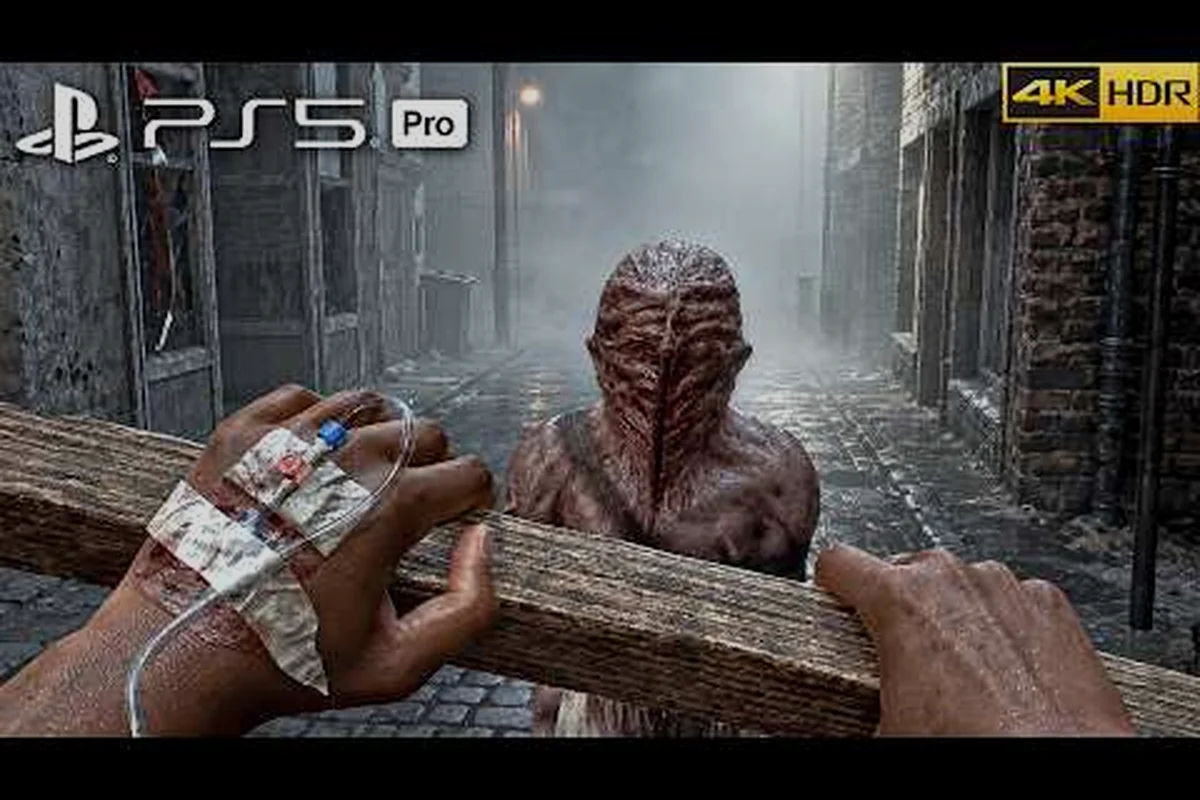
Plan your schedule with this Silent Hill Townfall playtime breakdown, which estimates first-run hours by playstyle and walks the critical first two hours on St. Amelia. You will learn what to do first after the ferry, how death and saves actually work, and why early stealth discipline keeps a standard run inside the nine-to-twelve hour band.
Understanding SILENT HILL: Townfall Playtime and Pacing
Planning a first run through SILENT HILL: Townfall starts with one practical question: how long does the game actually take, and how does the opening hour feel on the controller? Knowing the SILENT HILL: Townfall playtime up front lets you decide whether to schedule a single long sit-down or a string of short fog-walk sessions, and it shapes how aggressively you chase collectibles versus main story beats.
A useful way to think about SILENT HILL: Townfall playtime is to break it into three distinct phases. The opening act through the ferry terminal and initial town streets is roughly the first 90 minutes, the mid-game through the hospital, chapel, and lighthouse districts takes another 4 to 6 hours, and the endgame plus any ending choice cleanup adds the remaining time. These bands are reported by players, not officially tiered by the developer, so treat them as planning ranges rather than commitments.
| Playstyle | Estimated Hours | Notes |
|---|---|---|
| Main story only | 7–8 hours | Skips most side content and lore pickups |
| Standard first run | 9–12 hours | Natural exploration, some backtracking |
| Completionist | 14–16 hours | Every collectible, multiple CRTV recordings |
| Speedrun route | ~2 hours | Frame-perfect skips, not realistic blind |
Pacing inside the game leans slow by design. The CRTV pocket TV encourages you to stop and tune signals before opening locked doors, environmental storytelling in the alleys and shorelines rewards standing still, and several puzzle rooms can chew through 15 to 20 minutes if you misread a clue. Reviews describe the experience as "often phenomenal but exhausting", a phrase that captures the deliberate tempo. Plan to play in 60 to 90 minute blocks rather than marathon sessions; the atmosphere compounds when you sit with the fog, and fatigue blunts the puzzle reads you need to push forward.
If you want a deeper primer on the broader world before you boot the game, the story summary and lore guide lays out who Simon Ordell is, why St. Amelia matters, and how the 1996 timeline connects to the wider series. That context makes the opening hour land harder because you already know what Simon is running from.
The First Two Hours: What to Do First on St. Amelia
The first 90 minutes of SILENT HILL: Townfall are denser than almost any other stretch in the game, and what you do during this window sets up everything that follows. The community consensus on Silent Hill Townfall what to do first is consistent: move slowly, read every note, and treat the CRTV like a compass instead of a gimmick.
The Opening Ferry and Arrival
You begin as Simon Ordell stepping off a ferry onto St. Amelia in 1996, returning to a town he has not seen in years. The arrival sequence is largely linear and acts as a tutorial through environment rather than pop-ups. You will learn to pick up documents, examine environmental details, and open your first locked door before any enemy appears. Use this quiet window to get comfortable with the controller layout and the speed at which Simon turns. Combat, when it arrives, punishes over-rotation.
Picking Up the CRTV Pocket Television
Within the first 30 minutes, you acquire the CRTV pocket television, the series' analog radio reimagined as a handheld set that scans unstable signals for threats and puzzle hints. The CRTV is the single most important tool in your inventory during Silent Hill Townfall first 2 hours, because it shows silhouettes of nearby monsters when tuned to different frequencies and feeds you directional hints for locked rooms. The official SILENT HILL: Townfall on Steam page lists CRTV signal scanning as a core feature, and reviewers at GamingBolt confirm it functions as both radar and hint system. Cycle through channels whenever a new area opens; the static tells you what is ahead before you commit to a fight.
First Encounters and the Stealth Default
Your first hostile contact happens in a tight alley or a fenced yard, and it is a teaching moment rather than a test of skill. Enemies in the early game are slow, telegraphing lunges and giving you a wide window to sidestep, but they hit hard and one or two clean hits will leave you in critical health. The correct response on a first run is almost always to back away, find a corner, and let the monster lose interest. The stealth and evasion guide covers the exact spacing rules, but the short version is: if you can avoid a fight, avoid it. St. Amelia rewards the player who chooses when combat happens, not the player who charges in.
What to Skip vs. What to Loot
Loot discipline matters more in the first two hours than at any other point. Healing items, CRTV recordings, and key documents are useful; flavor pickups and breakable melee weapons are temporary and will be replaced within an hour. Pick up every document and cassette because the story context compounds across the run, and you cannot backtrack to missed pickups after certain chapter transitions. Skip the urge to hoard junk items that clog your inventory; a leaner pack means faster decisions in panic moments.
| Priority Tier | Pickup Type | Reason |
|---|---|---|
| Always | Documents, notes, cassettes | Story context, some unlock hidden areas |
| Always | CRTV recordings and signal fragments | Unlocks tuning hints, reveals monster positions |
| Usually | Healing items, bandages | Stamina and health are scarce |
| Situational | Breakable melee weapons | Useful for 1–2 encounters, then break |
| Skip | Decorative items, redundant keys | Inventory bloat, no mechanical value |
How Saves Work and What Happens When You Die
Death in SILENT HILL: Townfall is not the end of the run, but it is not free either, and the save system is structured to make every death feel like a real cost. Knowing exactly Silent Hill Townfall what happens when you die and how the save loop is wired keeps you from losing progress to a single bad encounter.
The Phone Save Mechanic
Rather than autosaves or quicksaves, the game commits progress through a diegetic save system: you locate a public payphone in the environment, interact with it, and the game records your position, inventory, and chapter flags at that phone. Phones are not everywhere, and they are often placed in the same room as a boss door, a major puzzle, or a chapter transition, which means the save moment is also a checkpoint of intent. After you cross certain thresholds, you cannot return to the previous phone, so the act of saving becomes a deliberate pause rather than a reflex.
| Save Condition | Effect |
|---|---|
| Save at a payphone | Records position, inventory, flags |
| Die before reaching a new phone | Respawn at last phone, retain inventory |
| Die after a chapter transition flag | Respawn at new phone in current chapter |
| Quit without saving | Resume from most recent phone only |
What Death Costs You
When you die, you respawn at the last payphone you activated. Your inventory is preserved, which means you keep your healing items, documents, and any keys you have collected. What you lose is time, sanity resources, and positional momentum — the monsters between the phone and your death point are still there, the puzzle progress you had been building is gone, and any consumable healing you burned in the failed attempt is gone for good. On higher difficulty tiers the respawn may also reset certain encounter triggers, which means a death can cascade into two or three more deaths if you are not careful.
There is no permadeath mode at launch, and the game does not roll your save file backward when you die. It also does not autosave between phones, so quitting without saving means you reload the most recent phone. This is the answer to Silent Hill Townfall what happens when you die in practical terms: the run continues, but you walk back through the same fog and the same enemies with fewer resources than you had the first time.
Why New Players Die in the Same Four Ways
New players tend to die for the same handful of reasons, and all of them are avoidable once you see the pattern. Over-rotation in melee causes you to swing past the enemy and catch a return hit. Looting in the open during an active encounter turns a survivable scrap into a death. Pushing forward without checking the CRTV first sends you around a corner into a room with three monsters and no exit. The common new player mistakes guide expands on each trap, but the short list is: check the CRTV, manage stamina, save at every phone, and never fight when you can walk away.
Can You Fight Enemies and How the Combat System Works
The headline question on the lips of almost every new player is whether the game is strictly stealth or whether Silent Hill Townfall can you fight enemies without being punished for it. The honest answer is: yes, you can fight, but the design makes you earn every engagement and discourages fighting as a default.
The Intentional Clumsiness of Combat
Reviewers describe the combat as "intentionally clumsy", with wild melee swings, unreliable blocks, and enemies that absorb more hits than you expect. The Escapist's review notes that the late-game revolver hits hard but reloads slowly and attracts creatures through noise, so direct combat is a real commitment rather than a casual option. This is not a souls-like where dodging and punishing is the rhythm; this is a survival horror where every swing is a risk, and the safer path is almost always to slip past a monster instead of swinging through it.
| Engagement Type | Risk Level | Reward |
|---|---|---|
| Stealth pass-by | Low | Saves resources, preserves health |
| Distraction (thrown bottle, brick) | Low–Medium | Redirects enemy, opens flanking path |
| Melee takedown | Medium | Clears the encounter, costs durability |
| Ranged takedown (pistol, revolver) | High | Loud, attracts other monsters |
What Weapons You Can Actually Use
Your arsenal is intentionally limited. Early on, your main option is improvised melee: pipes, planks, and other breakable items found in the environment. These weapons deal modest damage and break after a handful of swings, so each melee kill is also a small economic loss. A pistol appears later in the mid-game, and a revolver shows up in the late game as a heavy-hitting but slow and loud option. Thrown bottles and bricks occupy a middle layer that lets you distract enemies from a distance without committing to a melee swing. The full enemy behavior and weapon matchup guide breaks down the optimal tool for each enemy archetype, but the general rule is: melee for tight corridors, throwables for redirection, and firearms only when you have already cleared the area.
When Fighting Is the Right Call
Combat is the right call in three situations. First, when an enemy has blocked a path and stealth routing is not viable — some corridors are too narrow to bypass. Second, when you are in a save room or a phone alcove, where a quick takedown prevents the monster from following you into the safe zone. Third, when the encounter is required for a story or progression flag, which the game signals through locked doors or NPC dialogue. In every other case, the better play is to read the monster's patrol, find the gap, and move past without ever raising a weapon.
Building a Realistic First-Run Plan
Once you understand SILENT HILL: Townfall playtime, the first two hours, the save system, and the combat rules, the last step is to turn that knowledge into a run plan. A realistic first run is not about speed; it is about session length, save discipline, and engagement economy.
A practical first-run schedule looks like three or four sittings of 90 to 120 minutes each, with a save at the end of every sitting. This rhythm respects the game's slow tempo, gives your brain time to sit with the story between sessions, and prevents the fatigue that causes most new-player deaths. If you can only play in 45 to 60 minute windows, that is also fine; the save system is designed to support short play sessions, and most chapter transitions land within an hour of starting from a phone.
| Run Goal | Recommended Sittings | Notes |
|---|---|---|
| Main story, one ending | 3–4 sittings of 90 min | Stop at every phone |
| One ending + most collectibles | 5–6 sittings of 90 min | Use chapter flags to plan |
| All five endings, NG+ included | 10+ sittings | Requires reload planning |
A clean first run on Standard difficulty should land somewhere between 9 and 11 hours of active play, plus a couple of additional runs of 2 to 3 hours each if you are chasing other endings. The Speedrun achievement is its own project and realistically adds another dedicated session once you have learned the routing. None of these numbers are official targets, and your time will vary based on how long you linger in alleys and how often you stop to read a note. Treat the bands as planning ranges, and do not feel pressured to rush St. Amelia — the game gives back to players who sit with the fog, and the most memorable moments are the ones you do not see coming.
Frequently Asked Questions
How long is the SILENT HILL: Townfall playtime for a first run?
A first run on Standard difficulty typically falls between 9 and 12 hours of active play, according to community data and reviewer estimates. Players who skip side content and stick to the main story can finish in about 7 to 8 hours, while completionists chasing every cassette, document, and CRTV signal fragment push toward 14 to 16 hours. The opening 90 minutes are deliberately dense, and most of the variance happens in the mid-game hospital and lighthouse districts.
What should I prioritize during the Silent Hill Townfall first 2 hours?
During the first two hours, your top priorities are learning the CRTV pocket TV's signal cycling, looting every document and cassette for story context, and defaulting to stealth instead of melee combat. The CRTV is your radar and your hint system, and most locked doors respond to a CRTV tuning before they respond to brute force. The stealth survival guide walks through the spacing and timing rules that keep the opening encounters survivable on a blind run.
What happens when you die in SILENT HILL: Townfall?
When you die, you respawn at the last payphone you activated and your inventory is preserved, but you lose the time and healing items you spent in the failed attempt. There is no permadeath mode at launch, and the game does not roll your save file backward, but it also does not autosave between phones, so quitting without saving means you reload the most recent phone. This design makes every death a real cost without ending the run, and it rewards players who save at every opportunity.
Can you actually fight enemies in SILENT HILL: Townfall?
Yes, you can fight enemies using improvised melee weapons, a limited-supply pistol, a late-game revolver, and throwable bottles or bricks. However, the combat is intentionally clumsy and loud, so direct engagement is a real commitment that often attracts more monsters. The optimal approach on a first run is to use stealth and distractions by default and only fight when the path demands it or when you are in a safe room. The enemy behavior and distraction guide maps out the best tool for each encounter type.
Is SILENT HILL: Townfall worth playing in short sessions?
Yes, the save system is built around short sessions. Payphones act as explicit save points placed near chapter transitions, boss doors, and major puzzles, so a 45 to 60 minute sitting that ends at a phone is a clean stopping point. The slow pacing and atmospheric storytelling actually compound across short sessions, and most players report that breaking the run into shorter blocks reduces fatigue-related deaths.