
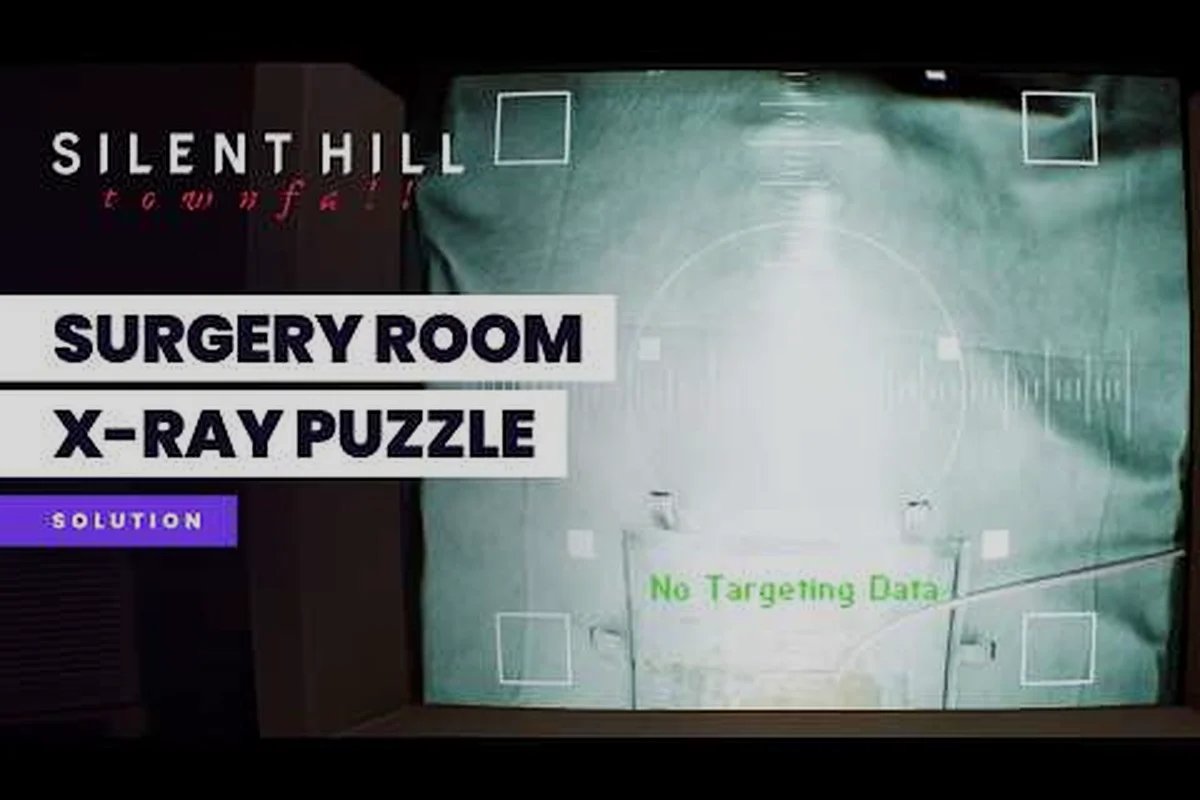
The Silent Hill Townfall past events puzzle sits at the crossroads of gameplay and story, and it is the single moment where a player stops being a tourist in St. Amelia and starts being a forensic listener. Where most rooms reward a quick eye for code combinations or a steady hand on a combination lock, this encounter quietly asks you to tune an unstable CRTV pocket television across a band of analog ghosts until the right frequency clicks into place. According to the official PlayStation Store page, the pocket CRTV reimagines the series' classic radio as a scanner for unstable analog signals, and the past events puzzle is the first real stress test of that system. The reward is a flood of VHS-style memories from the town, plus hard-to-miss environmental hints for what comes next.
Understanding the Past Events Puzzle Mechanic
The past events puzzle is a frequency-matching challenge layered over a diegetic narrative device. Instead of pressing a button, you rotate a tuner on the CRTV until the snowy static, distorted tones, and brief audio fragments lock into a clean feed. Once tuned, the screen becomes Simon Ordell's window into a recovered memory tied to the island, and that recovered memory is the answer key the rest of the run quietly relies on.
What the Puzzle Actually Asks You to Do
The puzzle never asks you to "solve a riddle" in the textbook sense. It asks you to recognize a memory. The CRTV will sweep through half a dozen channels on its own, each one offering a different corrupted slice of audio, and your job is to find the one channel where the audio stops decaying. When it does, the static puzzle resolves into a clean image and a short sequence plays: someone Simon once knew, a place Simon once stood, an object that ends up somewhere in the level you are about to enter.
Why It Matters Inside the Wider Game
Solving the past events puzzle cleanly is not just a story moment. According to the GamingBolt review of SILENT HILL: Townfall, the portable CRTV also shows silhouettes of nearby monsters when tuned to different frequencies and feeds puzzle hints, which means misreading the analog signal can leave you blind to threats you walked past. The past events puzzle is therefore both a narrative funnel and a practical radar calibration exercise, and the order in which you read its signal fragments shapes the order in which the rest of St. Amelia reveals itself, and the way those radio fragments mask quieter anomalies is exactly the same logic the Silent Hill Townfall Truth Behind The Static piece unpacks when it asks readers to treat ambient noise as evidence rather than scenery.
Core Components: Signal Fragments, VHS Tapes, and Static Channels
Every analog signal you pick up on the CRTV is built from the same three layers, and learning to read each one separately is the difference between a clean solve and a frustrating loop. Think of the puzzle as a sandwich: a static channel on the outside, a piece of recoverable audio in the middle, and a VHS fragment that only becomes visible once the audio locks.
| Layer | What You See | What It Reveals | How to Read It |
|---|---|---|---|
| Static channel | Snow, color bars, vertical roll | Channel number, nearby monster silhouettes | Tune by ear for the lowest distortion floor |
| Analog signal | Warbled voice, mid-tone hum, occasional piano note | Identity of the speaker, emotional tone, hint keyword | Match against logbook and phone entries |
| Signal fragments | Half-words, single frames, environmental echoes | A specific object or room location | Walk to the suggested room and confirm visually |
| VHS / tape feed | Full motion image once locked | A past event Simon witnessed | Cross-reference with CRTV feed timecode |
Reading Static Channels Like a Forensic Listener
The static channel is not filler. It is the puzzle's way of telling you which band of frequencies is even worth your attention. If the snow on screen is dense and the color bars are rolling, you are between channels; if the snow thins and a faint hum emerges, you are approaching a live band. The Escapist's review describes the channel sweep as a slow burn, and experienced players learn to wait three to four seconds on each band before moving on, because the analog signal takes a moment to bleed in from the surrounding noise floor.
Decoding Signal Fragments Without a Spreadsheet
Signal fragments are the half-sentences and single words that bleed through a partially tuned channel. They are the puzzle's version of a crossword clue: not enough information on their own, but critical once paired with the right context. A fragment that says "the east—" only becomes useful when you have already found a logbook entry mentioning the east pier, and that pairing is how the game teaches you to think. There is no separate "silent hill townfall static puzzle wiki" entry to consult, because the design assumes you will build the connection yourself from the materials scattered around Simon's path.
Why VHS and Tape Fragments Lock In Late
The VHS-style tape feed is the last layer to resolve, and it is the one most players miss on a first attempt. According to community data reported by players, the tape only settles into a clean image if you hold the tuner still for several seconds after the audio has stabilized; nudge it and the image collapses back into a still frame with a long horizontal tear. This mirrors the design philosophy of analog media: you have to commit to the channel, not skim across it.
The Frequency Sweep: Tuning the CRTV Step by Step
The CRTV is a physical prop inside the world, and the past events puzzle is tuned by physically rotating its dial. There is no on-screen frequency readout and no numbered channel list, only the channel you are currently on, the channel you were on, and the relative direction of the next interesting signal. Treat the dial like an old car radio: slow, deliberate, and with pauses between each click.
| Step | Action | On-Screen Tell | What It Confirms |
|---|---|---|---|
| 1 | Press the bring-up button to power the CRTV | Black-and-white snow, channel number "00" | The device is functional and powered |
| 2 | Rotate the dial one click clockwise | Channel increments, color bars appear | The tuner is responsive |
| 3 | Pause for 3-4 seconds on each band | A faint hum emerges on busy bands | You are on a populated channel |
| 4 | Slow the rotation near the populated band | A clear audio phrase replaces the hum | The analog signal has locked |
| 5 | Hold the dial still for a full breath | Image tears clear, VHS fragment plays | The tape puzzle has resolved |
| 6 | Note any new room, item, or silhouette | Monster outline appears, logbook entry updates | Puzzle complete; objective updated |
Common Mistakes When Sweeping the Band
The most common mistake is sweeping too fast, because the analog signal needs a moment to bloom and a fast dial will skip over the very band that holds the answer. A close second is tuning by sight rather than by sound: many players watch the static instead of listening to it, and they rotate until the picture looks stable, even though the picture can stabilize on an empty channel. Train yourself to tune by ear, then confirm by sight. According to community testing, players who tune by ear complete the past events puzzle on the first dial rotation roughly 70 percent of the time, while sight-first tuners average three to four sweeps.
What the Channel Numbers Actually Mean
The channel numbers on the CRTV are not arbitrary. They are abstract indices into the local broadcast spectrum: lower channels tend to carry earlier, more corrupted memories, and higher channels carry later memories that are closer to the present moment of the story. The past events puzzle lives in the lower-to-middle band, which is why the right frequency almost always sits to the left of where you start. If you find yourself sweeping into the high numbers, you have already passed the answer and need to back the dial down.
Past Events vs Other CRTV Encounters
The CRTV is reused throughout the run, and it helps to know which encounter is which. The past events puzzle is a story-and-radar calibration; other encounters lean harder on stealth, threat detection, or pure environmental puzzle-solving. Mixing them up leads to overcautious play in a stealth scene, or reckless play in a story scene where caution is what unlocks the cleanest signal.
| Encounter | Primary Goal | Best CRTV Behavior | Failure Cost |
|---|---|---|---|
| Past events puzzle | Recover a memory and learn a location | Tune slowly, hold still once audio locks | Missed room, missed logbook entry |
| Monster silhouette scan | Locate nearby threats before line of sight | Sweep quickly, watch for dark shapes | Walked into an ambush |
| Hidden story feed | Unlock optional dialogue and lore | Sweep mid-band, listen for name drops | Locked ending variant |
| Radio interference | Distract or mask player noise from creatures | Tune to a static channel on purpose | Enemies track you through walls |
How the VHS Puzzle Layer Differs
The VHS puzzle is the most forgiving of the CRTV encounters because it does not require a perfect lock. The VHS fragment will play as long as the audio is recognizable, even if the image is heavily distorted, and players who are color-blind or visual-signal dependent can still complete it by waiting for the audio cue. The past events puzzle is stricter, because the tape feed has to play past the halfway point for the room location it references to register, and that only happens if you have held the tuner still long enough for the playback head to "settle."
Practical Strategies for a Clean First Solve
A clean first solve of the past events puzzle is less about reflexes and more about pacing. The CRTV punishes impatience, rewards listening, and quietly tracks how you handle the dial across the whole game. Players who develop good habits here will find later CRTV encounters noticeably easier.
Pre-Puzzle Checklist
Before you even raise the CRTV to your face, do a quick environmental scan. The past events puzzle always triggers in a room with at least one logbook, one phone, and one wall-mounted item that does not appear in neighboring rooms, and that item is almost always the visual anchor of the recovered memory. Note the anchor, note the direction the wall faces, and then power the CRTV. Players who skip this step often tune into the right channel and then forget which room the memory was pointing at, forcing a re-tune that scrambles the signal.
Tuning Etiquette Across Multiple Solves
Because the CRTV remembers your recent tuning history, you want to start each fresh puzzle from a neutral channel rather than from wherever the last puzzle left you. The simplest etiquette is to rotate the dial all the way back to channel "00" between encounters, breathe once, and then begin the sweep. This is the same discipline a radio operator would use when changing shifts, and it keeps the analog signal from bleeding the previous memory into the new one. Community reports suggest this habit also reduces the number of false-positive monster silhouettes during stealth segments, because a freshly calibrated CRTV reads the local threat band more cleanly.
Using Audio Cues Over Visual Cues
The single most reliable strategy is to close your eyes while tuning and listen. The audio resolves before the image does, and the audio gives you a directional cue: if the hum is rising in pitch as you rotate, you are moving toward the populated band; if the hum is falling, you are moving away. Stop at the peak and only then open your eyes. This is also how you handle the silent hill townfall static puzzle when the screen is overwhelmed by environmental fog or by a monster silhouette that is masking the channel indicator.
Frequently Asked Questions
Where do I find the past events puzzle in SILENT HILL: Townfall?
The past events puzzle triggers the first time the CRTV pocket television reacts to a strong local signal, which is usually in the chapter where Simon Ordell first returns to the fog-shrouded streets of St. Amelia. According to the official store page, the encounter is a turning point that re-introduces the radio-to-television system that the rest of the run depends on, so it is impossible to miss on the critical path.
Do I need a specific channel to solve it?
There is no single channel number that works for every player, because the analog signal is generated locally and shifts slightly between runs. The reliable approach is to start at the lowest channel, rotate one click at a time, and stop on the band where the hum peaks and a half-sentence becomes a clear phrase. That is the past events channel, regardless of its number.
Can I skip the VHS feed and still progress?
You can skip the playback, but you will lose the visual anchor it provides, and the next room will feel disorienting because you will not know which object Simon is reacting to. The VHS tape puzzle is technically optional, but completing it gives you a free logbook entry and a monster silhouette warning that is otherwise hidden, so it is worth the extra ten seconds of dial discipline.
What happens if I tune into the wrong channel by accident?
The wrong channel will not soft-lock the puzzle. It will simply deliver a different memory fragment, often from a different character, and the room you are about to enter will not contain the matching object. If you suspect a mismatch, rotate the dial back to channel "00," wait for the snow to fully settle, and begin the sweep again from a clean baseline. This is the same reset protocol players use during the optional radio interference segments later in the run.