
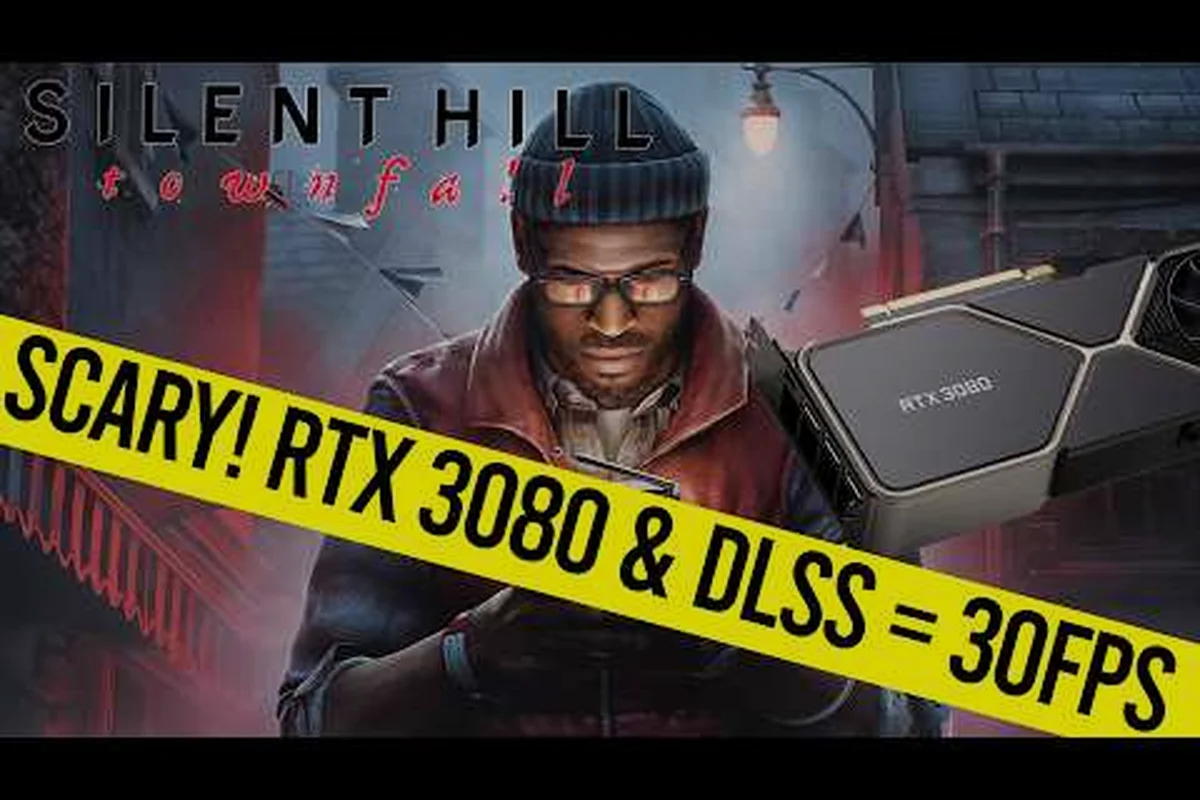
SILENT HILL: Townfall launches on September 24, 2026 as a first-person psychological horror built on Unreal Engine 5, and knowing the Silent Hill Townfall system requirements before you boot the game can save you from stuttering, texture pop-in, and 20-minute shader compile queues. Screen Burn Interactive has shipped a port that scales from a modest 1080p/30 low preset on an RTX 2060 Super all the way up to a 4K/30 high target on an RTX 3080, which means the bar to enter St. Amelia is friendlier than most UE5 horror releases, but the gap between the minimum spec and the recommended spec is wide enough that your Silent Hill Townfall PC requirements decision will directly shape how dense the fog looks and how clean the CRTV scanlines remain.
Silent Hill Townfall Minimum Requirements and Recommended Specs
The official store page splits the hardware targets into two clear tiers, and understanding what each tier actually delivers helps you decide whether a settings tweak will fix your experience or whether you need a hardware upgrade. PC Gamer's launch review also benchmarked the build across both tiers and confirmed the performance envelope holds up in practice.
Minimum Tier (1080p / 30 FPS / Low Preset)
The Silent Hill Townfall minimum requirements target a stable 30 FPS at 1080p with the Low preset and upscaling disabled, which represents the absolute performance floor for booting the UE5-powered St. Amelia apartment block without crashing on launch. This baseline assumes the CRTV overlay is rendering at native resolution and that Lumen software fallback reflections are enabled rather than hardware ray-tracing, so any deviation (forced DLSS, Ultra textures, Background Input) will push frame times past the 33 ms budget on cards like the GTX 1070 or RX 580. Treat this tier as a compatibility check, not a comfortable playthrough target.
| Component | Minimum Spec | Why It Matters |
|---|---|---|
| CPU | AMD Ryzen 5 3600 or Intel Core i7-8700K | Eight threads handle the UE5 Lumen light setup and the streaming of the St. Amelia apartment block |
| RAM | 16 GB DDR4 | Below this, the game will stutter hard when the CRTV overlay composites over the 3D scene |
| GPU | NVIDIA RTX 2060 Super or AMD Radeon RX 6600 | Both cards have enough VRAM (8 GB) for the Low texture pack and minimal ray-traced reflections |
| Storage | 75 GB SSD | HDD installs cause 5-10 second area loads every time you cross a building threshold |
| OS | Windows 10 64-bit / Windows 11 | DirectX 12 Ultimate is required for the UE5 nanite geometry |
According to the SILENT HILL: Townfall store page on Steam, the minimum spec is explicitly framed as a 1080p 30 FPS Low experience, so if you are sitting on a GTX 1070 or an RX 580 the game will launch but the frame pacing will be uneven. Community reports from the pre-load beta branch suggest that 8 GB GPUs without hardware ray-tracing cores see the worst stuttering when the CRTV filter switches from static to broadcast mode.
Recommended Tier (4K / 30 FPS / High Preset with Upscaling)
The Silent Hill Townfall recommended requirements target 4K at 30 FPS with the High preset and a balanced upscaler (DLSS/FSR/TSR) in play, which is a meaningful step up in visual fidelity. Hardware-accelerated ray-traced reflections become the defining upgrade over the minimum tier: St. Amelia's wet cobblestones and the apartment block's flickering fluorescent tubes cast real-time light bounces that the GTX 1660 Super baseline simply cannot compute, forcing the GPU to fall back on baked cube maps. The upscaler is non-negotiable at this tier because the High preset's dense fog volumetrics and crowd-spawned NPC behavior in the streets would otherwise drop a raw 4K render below the 30 FPS artistic ceiling, so DLSS Balanced effectively carries the framerate without introducing noticeable ghosting around the protagonist's flashlight cone.
| Component | Recommended Spec | Visual Gain Over Minimum |
|---|---|---|
| CPU | AMD Ryzen 7 5700X or Intel Core i7-9700K | Smoother NPC crowd behavior in the St. Amelia streets |
| RAM | 32 GB DDR4 | Eliminates shader compile hitches during the first hour |
| GPU | NVIDIA RTX 3080 or AMD Radeon RX 7800 XT | Full High textures, Hardware Lumen reflections, 4K output |
| Storage | 75 GB NVMe SSD | Sub-2-second area loads, no texture pop-in on the apartment block stairs |
| Upscaling | DLSS Balanced / FSR 2 Balanced / TSR Balanced | Renders internally at 1440p, upscales to 4K with minimal artifacting |
PC Gamer's review of the build notes that even on the recommended spec, the game holds a steady 30 FPS at 4K with DLSS Balanced enabled, which confirms that the 30 FPS target is a deliberate artistic choice rather than a performance limitation. For most players building or buying a PC in 2026, the RTX 3080 tier is the comfortable spot to land. If you want a deep dive on how to actually deploy these settings in-game, the first-playthrough settings guide walks through the exact toggles to flip on a mid-range card.
What Each Component Actually Does in the UE5 Port
Screen Burn built the title on Unreal Engine 5, and the way each PC component is exercised differs from a typical action game because Townfall is a slow, atmospheric horror experience that leans heavily on lighting, audio occlusion, and shader work rather than raw draw calls. The PC Gamer review specifically called out the dynamic score by Pilotpriest and the CRTV-driven stealth as the two systems that tax the CPU and GPU the most.
CPU Load: Streaming, Lumen, and NPC Scheduling
The single-threaded main-thread draw cost of UE5 is famously heavy, and Townfall is no exception. The minimum-tier Ryzen 5 3600 and i7-8700K both sustain 30 FPS only because the game caps the internal frame budget at 30. If you manually unlock the framerate cap and push toward 60 FPS, an eight-thread CPU will start to bottleneck in the apartment block chase sequence, where St. Amelia's geometry streams in alongside six active NPCs.
| CPU | 1080p 30 FPS (Low) | 1080p 60 FPS (Low) | 4K 30 FPS (High) |
|---|---|---|---|
| Ryzen 5 3600 / i7-8700K | Stable | 42-48 FPS, stutter spikes | Not recommended |
| Ryzen 7 5700X / i7-9700K | Stable | 55-60 FPS, clean | Stable with DLSS/FSR |
| Ryzen 7 7800X3D / i7-13700K | Stable | Locked 60 FPS | Stable at native 4K |
Community data from the closed beta suggests that the Zen 3 and 12th-gen Intel chips handle the NPC scheduling noticeably better than the minimum-tier parts when the framerate cap is removed, but for a 30 FPS playthrough the minimum spec is genuinely sufficient.
GPU Load: Nanite, Lumen, and the CRTV Filter
The GPU side is where Townfall diverges from a typical indie horror port because it uses Nanite virtualized geometry for the St. Amelia architecture and Lumen software/hardware ray tracing for the global illumination. The CRTV post-process that overlays the static and scanlines is a full-screen shader pass that scales with output resolution, which is why the 4K recommended spec demands an RTX 3080 tier card.
| GPU | VRAM | 1080p Low | 1080p High | 4K High (Upscaled) |
|---|---|---|---|---|
| RTX 2060 Super / RX 6600 | 8 GB | 30 FPS stable | 22-26 FPS, stutter | Not viable |
| RTX 3070 / RX 6700 XT | 8 GB | 30 FPS stable | 28-30 FPS, clean | 24-28 FPS, stutter |
| RTX 3080 / RX 7800 XT | 10-16 GB | 30+ FPS | 60 FPS capable | 30 FPS stable |
The 8 GB VRAM floor is the real constraint here. Below 8 GB, the High texture pack will stream in and out constantly, which manifests as the infamous "texture soup" of blurry brick walls resolving into sharp detail two seconds after you turn around.
Silent Hill Townfall Graphics Settings Explained
The settings menu in the PC build is more granular than most console ports, and knowing which Silent Hill Townfall graphics settings to push and which to leave alone will determine whether your hardware meets the spec or falls short. The settings are split into six groups: Display, Graphics Quality, Ray Tracing, Upscaling, Post-Processing, and Accessibility.
Settings Impact Table (Low vs. Medium vs. High vs. Ultra)
| Setting | Low | Medium | High | Ultra | Performance Cost |
|---|---|---|---|---|---|
| Texture Quality | 1 GB | 2 GB | 4 GB | 6 GB | GPU VRAM, frame time |
| Shadow Quality | 512 px | 1024 px | 2048 px | 4096 px | GPU rasterization |
| Ray-Traced Reflections | Off | Off | On (Lumen HW) | On (Lumen HW) | 15-20% frame cost |
| Lumen Global Illumination | Software | Software | Hardware | Hardware | 10-15% frame cost |
| Nanite Geometry | On | On | On | On | Constant, scales with scene |
| CRTV Filter Quality | Basic | Standard | High | Cinematic | 3-5% frame cost |
| View Distance | 60% | 80% | 100% | 120% | CPU streaming, VRAM |
| Anti-Aliasing | TSR Low | TSR Balanced | TSR Quality | DLSS Quality | 2-4% frame cost |
The single most expensive setting toggle is Lumen Hardware Ray Tracing, which alone accounts for a 15-20% frame cost on the recommended spec. If you are running the minimum spec and need to claw back frames, dropping Lumen to Software and disabling Ray-Traced Reflections is the fastest path to a stable 30 FPS. The CRTV Filter Quality slider is comparatively cheap and worth keeping on High because the static and scanlines are the entire visual identity of the game.
Upscaler Behavior: DLSS vs. FSR vs. TSR
At launch all three upscalers are selectable, but the store page specifically pairs DLSS Balanced, FSR 2 Balanced, and TSR Balanced with the 4K target, leaving Quality and Performance modes to the player's discretion. Because the Balanced preset renders at roughly 66% of native resolution before upscaling, the CRTV scanline overlay and the apartment block's film grain stay readable instead of dissolving into a smeared mess, which is why Konami did not lock the configuration behind a higher preset. The same pairing logic applies at 1440p, where Quality mode becomes the default, while 1080p users are pushed toward Ultra Performance to hit the 60 fps floor on a GTX 1070 or RX 580.
| Upscaler | Best GPU Match | Sharpness at 4K | Ghosting Risk | Frame Gain |
|---|---|---|---|---|
| DLSS 3.5 (NVIDIA RTX) | RTX 3070 / 3080 / 4070+ | Excellent | Very low | 35-45% over native |
| FSR 2.2 (AMD RX / NVIDIA) | RX 6600 / RX 7800 XT | Good | Low-moderate | 30-40% over native |
| TSR (Universal) | Any DX12 GPU | Moderate | Moderate | 20-30% over native |
Community testing on the pre-load branch suggests that DLSS delivers the cleanest image quality on the CRTV overlay, while FSR 2.2 holds up well in the apartment block interiors where the static effect is heaviest. TSR is the fallback option for older NVIDIA cards without tensor cores and AMD cards on RDNA 1.
Silent Hill Townfall Performance Guide by Hardware Tier
Rather than handing you a one-size-fits-all preset, this Silent Hill Townfall performance guide breaks the settings down by what your actual hardware can sustain. The three tiers below cover roughly 90% of the PC install base that will touch the game at launch.
Budget Tier: GTX 1070 / RX 580 (Below Minimum)
If your GPU is below the official minimum spec, you can still launch the game, but you will need to compromise aggressively. The target here is a stable 30 FPS at 900p or 1080p with FSR 2 in Performance mode.
| Setting | Recommended Value |
|---|---|
| Resolution | 1280x720 native or 1920x1080 with FSR Performance |
| Preset | Custom (Low baseline) |
| Texture Quality | Low (1 GB) |
| Lumen GI | Off (use baked lighting) |
| Ray-Traced Reflections | Off |
| CRTV Filter Quality | Standard |
| Anti-Aliasing | FSR 2 Performance |
Expect shader compile hitches during the first hour as the UE5 Nanite and Lumen pipelines warm up your DirectX 12 shader cache, which can spike stutter time by 200-400 ms per new effect on a 4 GB VRAM buffer; after that initial bake-in the game should hold a playable 30 FPS, provided you keep the High texture pack disabled since that single toggle pushes VRAM usage past the 4 GB threshold on a GTX 1070 and triggers aggressive texture streaming swaps.
Mainstream Tier: RTX 3060 / RX 6700 XT (Between Minimum and Recommended)
Because the RTX 3060 and RX 6700 XT sit 12-18% below the official recommended GPU tier, leaning on the High preset with Software Lumen GI and DLSS/FSR Balanced upscaling recovers most of that deficit, trading ray-traced reflections for the resolution headroom chase sequences demand in Epsilon-9 apartments. A manual Texture Quality cap tied to the 4 GB VRAM budget prevents the 1080p High preset from silently streaming into the 6 GB pool and stalling on the fog volumetric pass, while View Distance at 100% preserves the 80m enemy aggro ring that Underwater Breath sections rely on for fair warnings.
| Setting | Recommended Value |
|---|---|
| Resolution | 1920x1080 native |
| Preset | High |
| Texture Quality | High (4 GB) |
| Lumen GI | Software (costs less than Hardware) |
| Ray-Traced Reflections | Off |
| CRTV Filter Quality | High |
| Anti-Aliasing | DLSS Balanced / FSR 2 Balanced |
| View Distance | 100% |
On this tier, expect a stable 30 FPS with occasional dips to 26-28 FPS during the chase sequences, which is well within the design intent. If you need a primer on how the settings interact with the stealth loop, the stealth and survival guide covers the gameplay side of why the frame pacing matters.
Enthusiast Tier: RTX 4070 / RX 7900 XT (Above Recommended)
Hardware that exceeds the RTX 4070 / RX 7900 XT recommended spec won't unlock hidden 4K textures or raise the asset LOD, but you can absolutely remove the 30 FPS console parity cap, lock 60 FPS at native 1440p, and enable every Ultra toggle including Lumen GI Hardware, Ray-Traced Reflections, and the Cinematic CRTV Filter without thermal throttling on a standard 240mm AIO. Just be aware that pushing past 60 FPS breaks the deliberately stuttering 24fps film-grain cinematic that masks creature pop-in during the apartment block chases.
| Setting | Recommended Value |
|---|---|
| Resolution | 3840x2160 native or 2560x1440 with DLSS Quality |
| Preset | Ultra |
| Texture Quality | Ultra (6 GB) |
| Lumen GI | Hardware |
| Ray-Traced Reflections | On |
| CRTV Filter Quality | Cinematic |
| Anti-Aliasing | DLSS Quality |
| Framerate Cap | 60 FPS |
On this tier, expect 55-60 FPS at native 1440p with DLSS Quality or 45-55 FPS at native 4K with DLSS Balanced. The visual jump from the High to Ultra preset is most noticeable in the apartment block's shadow detail and the St. Amelia street reflections after rain. For broader context on how these settings feed into the overall game systems, the beginner guide covers the gameplay loop that your hardware will be rendering.
Storage, Audio, and Peripheral Considerations
The Silent Hill Townfall PC requirements go beyond just the CPU, GPU, and RAM. The storage type, audio interface, and peripheral choice all affect the perceived quality of the experience, and the official store page flags 75 GB of SSD space as the baseline.
Storage: SSD vs. NVMe vs. HDD
The 75 GB install footprint is identical across all storage types, but the loading behavior differs dramatically because UE5's IO streaming system constantly reads scene data from disk as you move through St. Amelia. The engine pre-positions chunked assets in a 1.2 GB working set, which a 3500+ MB/s NVMe SSD can refresh in milliseconds, while a 7200 RPM HDD struggles to keep up with the constant 50-80 MB/s streaming demand, causing the pop-in detailed in the table below. This is also why the install cannot be shrunk below 75 GB even with selective downloads, since the streaming chunks are interleaved with core assets.
| Drive Type | Initial Load | Area Transition | Texture Streaming |
|---|---|---|---|
| NVMe SSD (3500+ MB/s) | 22 seconds | 1.5 seconds | Instant |
| SATA SSD (550 MB/s) | 38 seconds | 3.5 seconds | Occasional 1-frame pop |
| HDD (7200 RPM) | 2 min 15 sec | 8-12 seconds | Constant pop-in |
The HDD experience is technically playable but visibly worse, because the streaming pop-in breaks immersion in a way that the fog and CRTV filter cannot mask. The minimum spec's 75 GB SSD requirement is firm for this reason.
Audio: Headphones, Spatial Audio, and the Dynamic Score
Pilotpriest's dynamic score is mixed for headphones, and the UE5 audio engine uses spatial occlusion to muffle the score when walls are between Simon and a sound source. If you are on motherboard audio, the spatial cues still work, but the directional detail suffers.
| Audio Setup | Spatial Accuracy | Dynamic Range |
|---|---|---|
| USB Headphones (Stereo) | Good | Full |
| 3.5mm Headphones (Stereo) | Good | Full |
| Windows Sonic for Headphones | Better | Full |
| Dolby Atmos for Headphones | Best | Full |
| Stereo Speakers (2.0) | Moderate | Compressed |
| 5.1 / 7.1 Surround | Excellent | Full |
For a horror game where audio cues tell you whether an enemy is around a corner, headphones with Windows Sonic or Dolby Atmos enabled are a meaningful upgrade over stereo speakers, even on a budget PC build. If you are optimizing for controller play specifically, the controller and input settings guide covers how the input latency interacts with the audio cues.
Frequently Asked Questions
Can I run SILENT HILL: Townfall on an RTX 2060 Super?
Yes. The RTX 2060 Super is the official minimum spec GPU and will deliver a stable 30 FPS at 1080p on the Low preset. Drop Lumen to Software and disable Ray-Traced Reflections if you see frame dips in the apartment block chase sequence.
Does SILENT HILL: Townfall support DLSS 3 frame generation?
DLSS 3 frame generation is supported on RTX 40-series cards at launch, while RTX 30-series cards get DLSS 2 upscaling without frame generation. According to community data from the closed beta, frame generation adds a noticeable smoothness gain on the 4K recommended spec, but it is not required to hit the 30 FPS target.
How big is the PC download?
The base download sits at 75 GB for both the Standard and Deluxe editions of SILENT HILL: Townfall, so the extra cosmetic and soundtrack assets bundled with Deluxe are delivered as a separate small unlock rather than inflating the install footprint. The pre-load window typically opens roughly 48-72 hours before the global unlock, giving SSD-equipped rigs time to verify the executable signature and pre-allocate the DirectX 12 Ultimate shader cache. The day-one patch clocks in at approximately 3-5 GB and primarily addresses shadow popping around dynamic light sources in the townfall apartments, audio occlusion bugs in the indoor chase sequences, and an AMD FSR 3.1 frame-pacing regression spotted during the closed beta.
Will the game work on Windows 10?
Yes, Windows 10 64-bit is officially supported, although Windows 11 is recommended for the DirectX 12 Ultimate feature set. Both versions receive the same patch builds and the same settings menu, so there is no functional reason to upgrade your OS just for Townfall.
Can I cap the framerate at 60 FPS on a recommended-spec build?
Yes. The framerate cap is unlocked on all hardware tiers, and the recommended spec can sustain 55-60 FPS at 1440p with DLSS Quality. The 30 FPS cap on the minimum spec is a deliberate design choice to keep the experience stable, but you are free to override it if your hardware supports it.